
Paula Badosa’s participation in the Australian Open came to an unexpected end in the second round, marking a disappointing start to the season for the Spanish player. Seeded 26th in Melbourne, Badosa was defeated by Russia’s Oksana Selekhmeteva, currently ranked outside the top 100, in straight sets. The match concluded 6–4, 6–4 after one hour and 39 minutes of play.
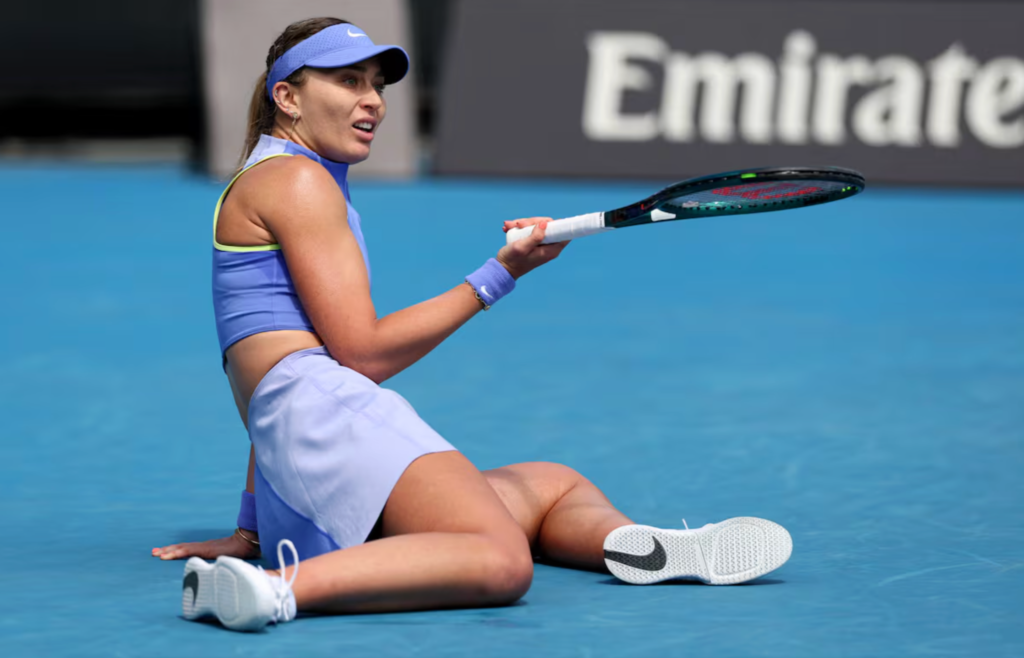
Hollie Adams (REUTERS)
The early elimination has had immediate consequences for Badosa’s position in the WTA rankings. After beginning the tournament ranked No. 25 in the world and coming off a semifinal appearance the previous year, the Spanish player is projected to drop to No. 64. The result raised concerns about consistency, as Badosa struggled to maintain control during crucial phases of the match against an opponent who grew increasingly confident from the baseline.
Badosa initially appeared to be in a favorable position during the opening set but was unable to capitalize on her early advantage. Selekhmeteva responded effectively, increasing the depth and variation of her shots and forcing errors from the Spaniard. In the second set, Badosa attempted to alter the momentum by playing more aggressively, yet the rise in unforced errors ultimately undermined her efforts.
The defeat comes at a time when expectations around Badosa had begun to rise again following a season focused on overcoming injury setbacks and rebuilding her form on the WTA Tour. Instead, the loss served as a reminder that further work and greater regularity are still required before she can realistically contend for major titles.
In her post-match comments, Badosa adopted a candid and measured tone. She acknowledged that her opponent performed better on the day and admitted that her own level did not meet expectations. At the same time, she pointed to positive aspects, particularly her physical condition, noting that her body is responding well and that continued match play will be essential to regain confidence.
Despite the significant drop in the rankings, Badosa expressed confidence in her ability to recover, drawing on past experience. She emphasized that she has previously navigated difficult periods, including time outside the top 100 as well as competing among the world’s top ten, and believes she has the tools to work through the current situation.
Looking ahead, Badosa underlined that the season is still in its early stages. She remains committed to her long-term goals and is focused on translating strong training performances into competitive matches. Her perspective reflects a willingness to approach the coming months with patience and determination as she seeks to restore her place among the leading players on the WTA Tour.