
Jessica Pegula’s run to the semifinals of the Australian Open 2026 is not the product of noise, hype, or raw power. Instead, it reflects something far less visible but equally decisive: clarity of thought, emotional balance, and an understanding of tennis that moves against the prevailing currents of the modern game. Often underestimated by fans and commentators alike, the American continues to build a career defined by consistency rather than spectacle — and Melbourne may finally be the stage where that approach delivers its ultimate reward.
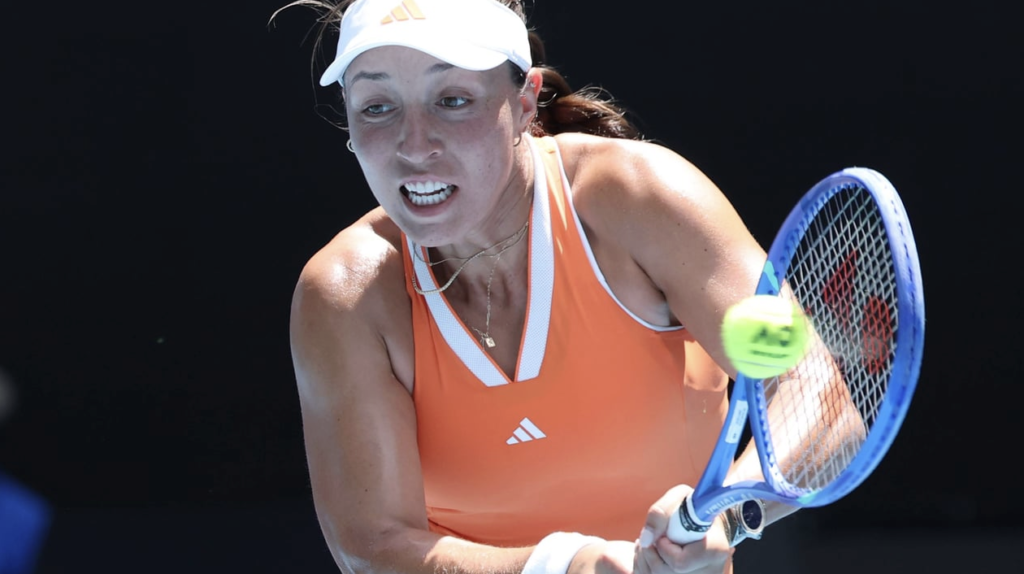
Cordon Press
By defeating Amanda Anisimova to reach the final four, Pegula confirmed that her presence among the title contenders is no coincidence. It is the result of years of steady progression, resilience after repeated setbacks, and a playing philosophy rooted in control rather than chaos.
Winning Without Excess
Pegula’s tennis rarely overwhelms opponents with sheer force, but it systematically dismantles them. Against Anisimova, she relied on precise serving, intelligent shot selection, and an unwavering commitment to her tactical plan. When momentum briefly shifted, Pegula did not react emotionally — a trait that has become one of her defining strengths.
“I trusted what I wanted to do,” Pegula explained after the match. “I stayed patient, made good decisions, and didn’t let frustration creep in when things didn’t go perfectly.”
That ability to remain composed under pressure has turned her into a difficult opponent for aggressive ball-strikers. Rather than matching power with power, Pegula absorbs pace, redirects it, and waits for the right moment to counter. It is a style that demands discipline and confidence — qualities that tend to improve with experience.
Learning Through Repetition and Disappointment
For much of her career, Pegula found herself knocking on the door of Grand Slam success without breaking through. Quarterfinal exits became a recurring theme, often accompanied by the feeling that something intangible was missing. Instead of forcing change, she refined her process.
“I don’t think I worked harder,” she reflected. “I just worked smarter.”
That distinction speaks volumes. Pegula credits her growth not to radical technical overhauls, but to incremental improvements: better understanding of match dynamics, sharper focus on detail, and acceptance of the modern tour’s increasing depth. The women’s circuit, she noted, has never been more competitive — making emotional control and tactical clarity more important than ever.
Emotional Stability as a Competitive Weapon
Perhaps the most revealing aspect of Pegula’s press conference was her explanation of how her personality shapes her tennis. Unlike many elite players, she does not rely on visible intensity or emotional release to fuel her performance.
“I don’t panic when things go wrong,” she said. “I don’t get overly angry either. That’s just who I am.”
This emotional equilibrium allows her to persist when matches become uncomfortable. Pegula sees persistence not as stubbornness, but as quiet defiance — a way of proving herself capable even when expectations are low. In a sport often defined by emotional extremes, her steadiness has become a competitive advantage.
Speaking Out on Player Privacy
Beyond performance, Pegula also addressed a growing issue within professional tennis: the increasing presence of cameras in off-court spaces. The debate intensified after footage of players breaking rackets circulated widely, raising concerns about boundaries.
“I don’t like being filmed everywhere,” Pegula stated firmly. “It crosses a line.”
While she supports offering fans greater access to players’ lives, Pegula argued that constant surveillance undermines personal space and well-being. Her comments echoed broader concerns within the locker room and highlighted her willingness to engage with structural issues affecting the sport.
A Different Kind of Contender
As Pegula prepares for her first Australian Open semifinal, she does so without dramatic proclamations or inflated expectations. Yet her chances are real. Her tennis may lack flamboyance, but it is built to endure pressure, adapt to opponents, and survive long rallies — precisely the qualities required to win a Grand Slam.
“I understand tennis differently,” Pegula said — a statement that now feels less like self-description and more like quiet prophecy.
In Melbourne, that difference might be exactly what carries her all the way.