
Sakkari stuns Swiatek in Doha and reshapes the WTA 1000: the win that changes the tournament map.
The Qatar TotalEnergies Open has just delivered one of those matches that can redefine an entire week. Maria Sakkari defeated top seed Iga Swiatek in the quarterfinals 2-6, 6-4, 7-5, booking her place in the semifinals after a comeback built on controlled aggression, tactical clarity and unmistakable conviction in the tightest moments.
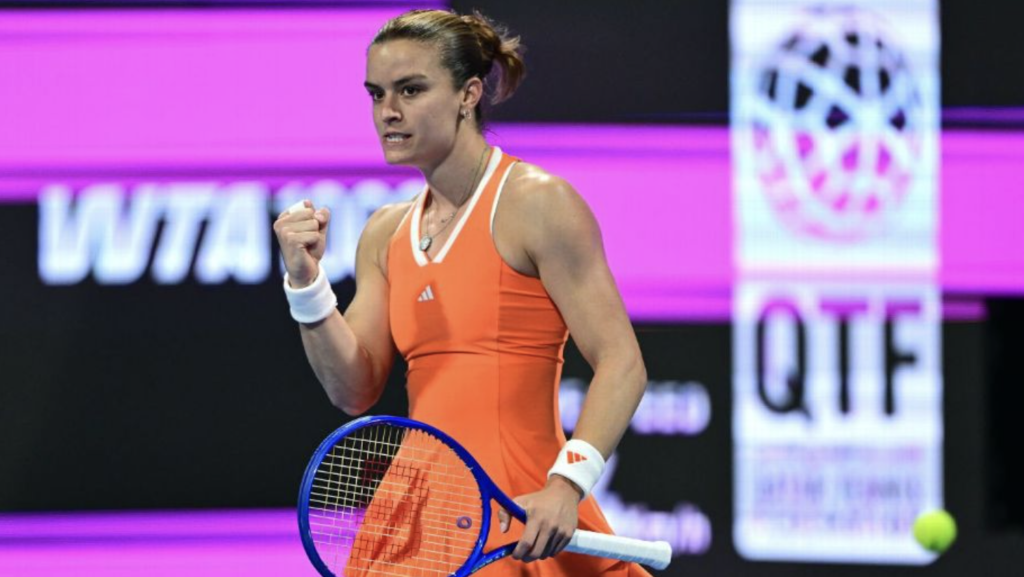
Getty images
This was not merely the fall of a favorite. It was the kind of result that shifts the narrative of a WTA 1000 tournament — because of who exits, how she exits and what it suggests about both players at this stage of the season.
A match turned by intent and structure. Sakkari stuns Swiatek in Doha
The opening set followed the expected script. Swiatek started with authority, dictating from the baseline, accelerating through her forehand and establishing the high-tempo control that often defines her best performances. The 6-2 scoreline reflected that early dominance.
From there, however, the match tilted.
Sakkari began holding serve with greater security and stepping inside the court more frequently. More importantly, she disrupted the “clean” rally patterns that tend to favor Swiatek. The second set became more physical and direct. Sakkari pushed exchanges into uncomfortable territory, shortening points when possible and forcing the Polish star into reactive positions.
The 6-4 set leveled the match, but the real story unfolded in the decider.
Managing the margins
In the third set, composure outweighed momentum swings. Sakkari did not rely solely on intensity. She stayed committed to a plan. Rather than waiting for errors, she chose her moments to attack. Instead of entering extended neutral rallies, she varied direction and timing to fracture Swiatek’s rhythm.
The final 7-5 reflected not just shot-making, but mental management. Against a player who typically thrives in closing stages, Sakkari held her nerve and executed with clarity.
What it means for Sakkari
This victory carries particular weight within the broader context of Sakkari’s career. According to WTA statistics, it marks her first win over a Top 5 opponent since Miami 2024 — a detail that explains why this result feels more significant than a routine quarterfinal triumph.
For several months, Sakkari has searched for the version of herself that once consistently contended at the highest level. In Doha, she rediscovered it. Physically imposing, assertive in decisive moments and tactically disciplined, she looked like the player who once seemed permanently anchored near the elite.
Symbolically, beating Swiatek at a WTA 1000 requires more than shot tolerance. It demands sustained belief. Many players can compete for a set. Few maintain structure across two consecutive sets against a top seed. Sakkari did exactly that.
What it signals for Swiatek
For Swiatek, the loss stings primarily because of context. Doha has often been fertile ground for her dominance, and as top seed she arrived with expectations aligned to that history.
Yet the defeat offers insight rather than alarm. When her control of rhythm is disrupted and she is pushed out of her preferred patterns, matches become more contested. Swiatek remains one of the tour’s most consistent forces, but this match reinforces that disciplined aggression can destabilize her if sustained long enough.
There is no sense of crisis — only a reminder that the WTA landscape is increasingly competitive.
A tournament recalibrated
Swiatek’s exit reshapes the draw. In WTA 1000 events, when the top seed falls, the bracket does not empty — it opens. Opportunities expand. Contenders sense proximity to a title that once appeared distant.
The WTA is already tracking ranking implications emerging from Doha’s results, underscoring how consequential this week may prove beyond a single trophy.
Sakkari’s win injects volatility into the semifinals and shifts expectations across the field.
The defining element: intention
If one word captures Sakkari’s performance, it is intention.
She did not merely endure. She redirected. From a set down against the tournament’s top seed, she recalibrated, sustained aggression and closed with authority.
This was not a fleeting surge or a perfect set followed by survival. It was a structural comeback — adjusted in real time, maintained for two full sets and sealed in the third with the kind of conviction required to beat Swiatek on a big stage.
Doha now has a new storyline. And at the center of it stands Maria Sakkari.