
Jannik Sinner and the mind before a big match: “I try to keep everything simple”
As he continues to establish himself as one of the central figures of the modern men’s tour, Jannik Sinner has offered rare insight into what happens in his mind before the biggest matches. In an interview with GQ, the Italian revealed a less visible side of the world No. 1: serenity as a method and normalcy as an anchor.
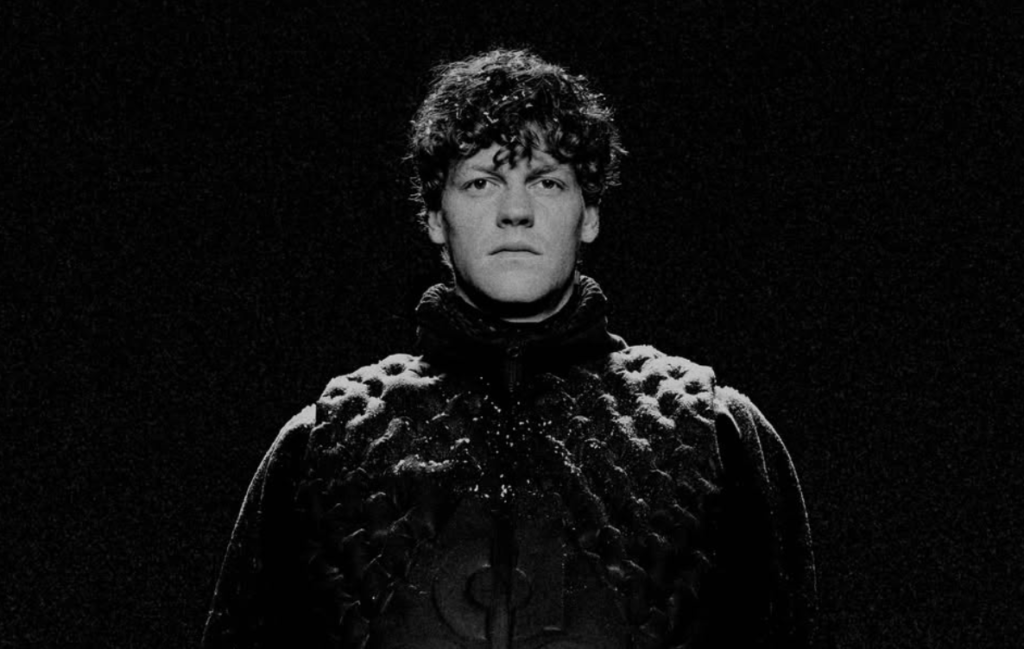
Asked whether he feels noise, nerves or adrenaline before a major match, his response was direct:
“I’m usually very calm and very focused. I try to keep everything simple.”
That sentence captures much of his competitive identity. In an era where emotional intensity often dominates the narrative, Sinner leans into clarity.
Preparation as a mental shield. Jannik Sinner and the mind before a big match
In his conversation with GQ, Sinner made it clear that by the time he steps onto the court, the work is already done. There is no improvisation and no room for dramatics.
The training sessions, tactical planning, repetitions and physical preparation take place long before match day. In the hours leading up to competition, he narrows his focus to controllable elements.
“I’ve always felt very calm thanks to my family,” he explained. “They taught me to work without overreacting. That’s why success has never changed me. I come from the most normal family in the world. My father was a chef and my mother worked as a waitress.”
That background is a recurring theme in Sinner’s public reflections. Unlike many meteoric rise stories built around spectacle, his is grounded in discipline, routine and a stable environment.
In a sport increasingly shaped by media attention and commercial weight, his emotional equilibrium appears less like personality and more like foundation.
The unexpected cost of success
While success has not altered his mindset, it has transformed his daily life. When asked what has been hardest to manage since reaching the top of the sport, Sinner did not hesitate.
“Privacy.”
He elaborated with notable honesty:
“You go to a restaurant or walk around the city doing normal things and people recognize you. It’s not a problem, but there are days when I would like to be a bit more alone. When I’m within my four walls and I don’t see anyone, I can do what I want and be exactly who I want to be.”
He then placed it in perspective:
“That’s the price you pay. But honestly, it’s also a good position to be in. I’m just a tennis player. I’m not a doctor or someone working in a hospital. For me, they are the real heroes.”
In an era when athletes are often absorbed by their own mythologies, Sinner’s framing is strikingly grounded. He does not romanticize fame, nor does he resent it. He accepts it.
The skier who might not have been a tennis player
Another layer of his profile adds depth to the narrative. Before becoming a tennis star, Sinner was a promising young skier. As a child, he competed in giant slalom and won a championship at just eight years old.
In the GQ interview, he admitted he still enjoys watching skiing competitions more than other sports. That detail is not trivial. Skiing demands balance, coordination and body control — qualities that now define his movement and precision on court.
The transition from snow to hard courts was not simply a change of sport. It was a choice that reshaped the competitive map of men’s tennis.
An unexpected talent
When asked whether he had a hidden talent, Sinner hesitated, looked toward his team, reflected — and smiled.
“I’m a good cook.”
He added humorously:
“Not many people have tried my dishes, so I’m very proud of that. I keep it quite secret. I learned a bit from my father. But it has to be pasta — otherwise they take away my passport.”
The remark blends humor and identity. The son of a chef who became world No. 1 still keeps cooking as a private ritual — not branding, but grounding.
Sporting context: calm amid constant comparison
These reflections arrive at a moment when Sinner sits at the center of the men’s game alongside players like Carlos Alcaraz. Comparisons between the two are constant, narratives around rivalry are amplified and expectations at every tournament are immense.
Yet his discourse remains unchanged. He does not lean into epic rivalries or historical weight. He speaks about simplicity.
That contrast matters in a broader reading of the tour. While some profiles are constructed around visible intensity, Sinner insists on composure.
More than an image
The GQ interview does not reveal a carefully engineered public persona. It reinforces what has long been visible on court: Sinner competes the way he lives.
Calm. Methodical. Resistant to overreaction.
In a sport defined by razor-thin margins and relentless pressure, that emotional steadiness may be his greatest hidden strength.