
“Iva Jovic: ‘I just try to be like Novak Djokovic.’”
On the surface, the headline sounds like the kind of admiration you might expect from a teenager breaking onto the tour. But in Jovic’s case, it reads less like fandom and more like a competitive blueprint.
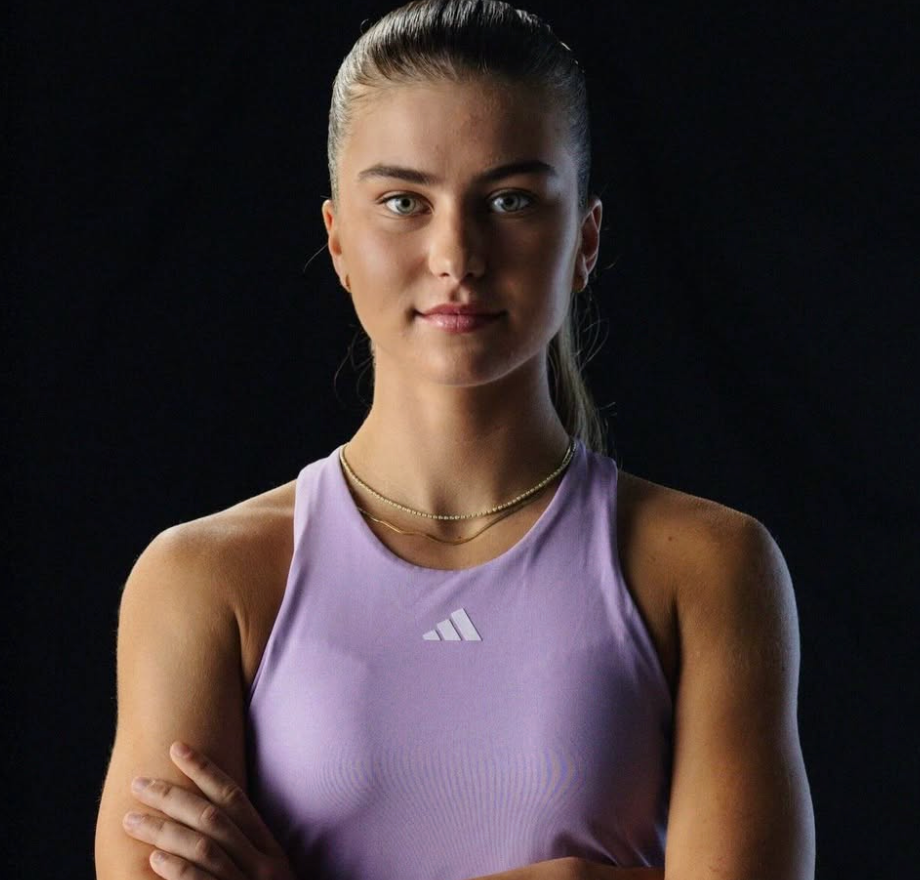
Iva Jovic and Her Djokovic Blueprint: Why “Trying to Be Like Novak” Is Much More Than a Phrase
The 18-year-old American, already establishing herself among the most promising players of her generation, explained ahead of the WTA 1000 in Dubai that her goal is not to copy isolated strokes. It is to adopt a way of living the profession: consistency, discipline, and a mindset that does not fracture when the calendar becomes relentless.
The quote, first reported by TennisUpToDate, was striking in its simplicity. “Just try to be like Novak… I’m going to keep it that simple.”
Simple words. Complex ambition.
The Context: Jovic Is No Longer a Prospect — She’s a Full-Time Tour Player
The statement arrives at a critical stage of a young player’s career: the transition from occasional wild cards and qualifying draws to living full-time inside the tour ecosystem.
In the same interview, Jovic spoke about how meaningful it feels to be “in tournaments every week” thanks to a ranking that allows her to plan a full season. That shift might seem administrative on paper, but in reality, it represents one of the most difficult psychological leaps in professional tennis.
It is one thing to perform in isolated opportunities. It is another to manage travel, scheduling, expectations, and physical wear week after week without losing emotional stability.
This is where Djokovic becomes more than a symbolic idol. Not because of his trophy count, but because of his method. His career has been built on the ability to compete at a high level across long stretches, even when fatigue — physical and mental — inevitably accumulates.
Jovic is not aspiring to a highlight reel. She is aspiring to sustainability.
“Being Like Novak” in WTA Terms: Consistency Over Inspiration. Iva Jovic and Her Djokovic Blueprint
Jovic emphasized one word repeatedly: consistency.
After a stretch of heavy match play, she explained that her priority is becoming the kind of player who can “go deep every week,” not just produce an isolated breakout result. That perspective mirrors a hallmark of Djokovic’s competitive identity: seasons are not defined by one perfect day, but by the repetition of high standards.
In today’s women’s circuit, where surface changes and scheduling shifts leave little room for recovery, this approach is essential. Many young players burst onto the scene with power and fearless shot-making. The real separation begins when they can sustain that level under fatigue, under scouting, under pressure.
Djokovic’s career offers a case study in how to make that leap.
For Jovic, “being like Novak” does not mean trying to mirror his backhand or his sliding defense. It means embracing the grind.
The Detail That Matters: Djokovic Gave Her Tactical Advice
The admiration is not abstract.
At the Australian Open, Jovic revealed that Djokovic took time to offer her specific tactical guidance. The tournament’s official website quoted her recalling that he gave her “very attentive tips,” advising her to open the court more, avoid rushing, and use greater width.
That detail changes the tone of the story.
This is not a marketing-friendly soundbite. It is technical mentorship.
More importantly, she applied it. “I tried to do that… keep listening to Novak,” she said.
When a young player frames development this way, it signals something valuable: she is building a system, not living off instinct. She is constructing repeatable patterns rather than chasing adrenaline.
That mindset is often the invisible dividing line between promising careers and enduring ones.
“Keep It Simple”: The Most Djokovic-Like Trait
In tennis, “keeping it simple” is rarely simple.
It does not mean playing safe. It means reducing mental noise. It means choosing clear patterns, repeating good decisions, and refusing to dramatize mistakes.
That concept defines Djokovic at his most resilient. When matches tighten, he returns to fundamentals: depth, balance, breathing, presence. He resets quickly. He does not spiral.
Jovic’s repeated emphasis on listening, applying, and staying measured echoes that philosophy.
Under pressure, clarity is an advantage.
Cultural Identity: Admiration That Runs Deeper
There is another layer to Jovic’s connection with Djokovic: her ties to Serbia.
According to Australian Open coverage, she regularly travels to Belgrade and Leskovac, where she has family. Her admiration, therefore, is not just professional. It carries cultural resonance.
For many players, Djokovic is the GOAT debate embodied. For Jovic, he is also a familiar figure within her extended identity. That proximity often transforms admiration into something more functional: a template for habits, discipline, and professionalism.
It makes the blueprint feel attainable rather than mythic.
The Real Test: Calendar, Body, and Discipline
If “being like Novak” is the aspiration, the immediate challenge mirrors the one every fast-rising player faces: physical management.
Ahead of Dubai, Jovic acknowledged that after a demanding stretch of matches she made conscious decisions to rest and protect her body before returning to competition.
That choice aligns perfectly with the Djokovic model. Select peaks. Train intelligently. Arrive fresh when it matters.
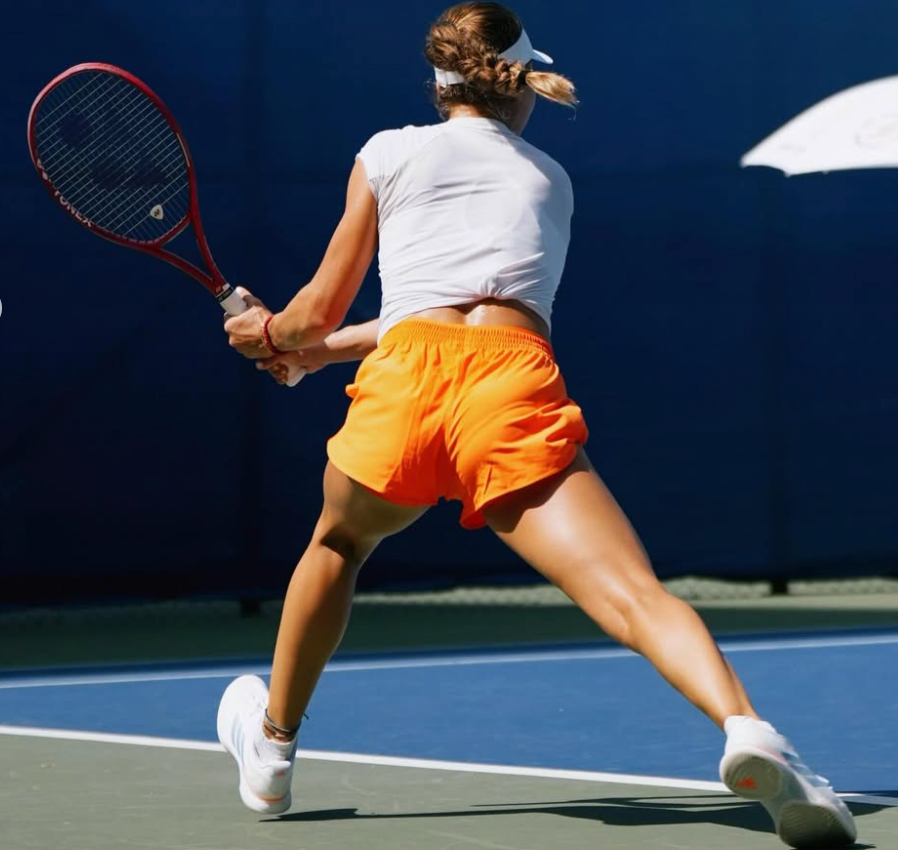
The difference between a promising trajectory and a lasting career often lies not in winning one title, but in structuring seasons without breaking down.
Djokovic’s longevity — now extending deep into his late thirties — rests on exactly that kind of planning.
Why This Matters Now
Because this is not just a flattering quote.
It reflects a performance philosophy that modern tennis increasingly rewards: consistency, routines, intelligent scheduling, and a mind that can be trained.
The WTA is searching for its next generation of sustainable contenders — not flashes, but fixtures. Jovic is articulating the right language for that ambition, and more importantly, she appears to be backing it with action: listening, applying, resting strategically, and measuring progress by repeatable standards.
“I just try to be like Novak Djokovic” makes for a compelling headline.
But the real story is this: Iva Jovic is trying to build a long career using a recognizable method. And in tennis, that is often the first sign that a player’s ceiling has yet to appear.