
The Qatar ExxonMobil Open in Doha reaches its decisive stage today. Four players remain, two semifinals to be played, and one clear impression: this ATP 500 has not been “just another tournament.” It has become a serious test of hierarchy on hard courts.
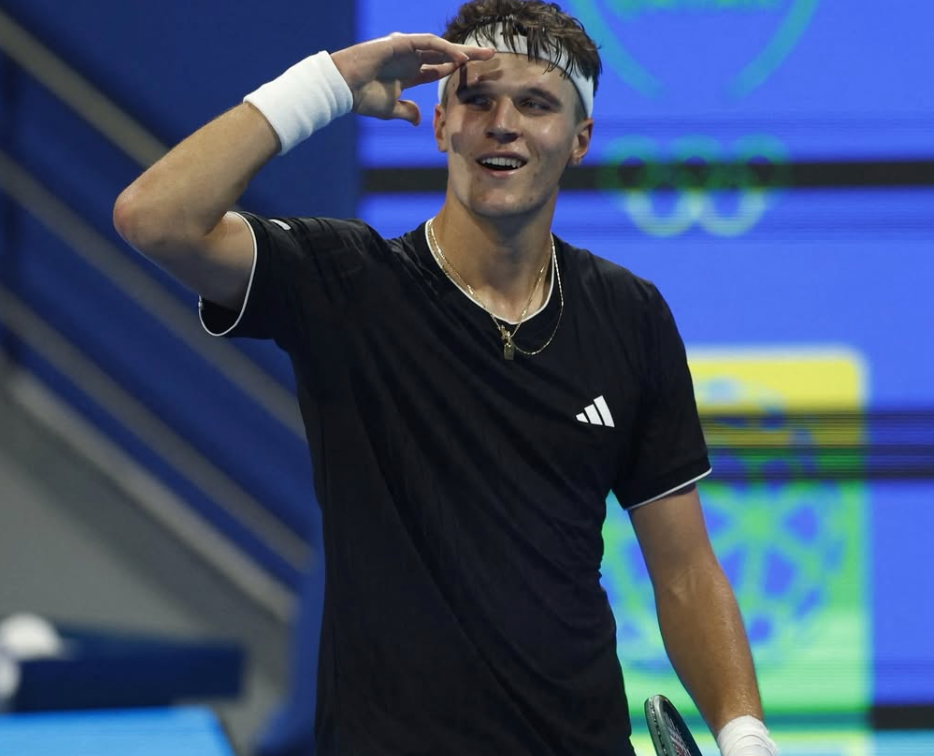
Doha Semifinals Today: Alcaraz–Rublev and Mensik–Fils
The first semifinal places Carlos Alcaraz against Andrey Rublev, the defending champion, in a clash of unmistakable styles: creativity and rhythm disruption versus linear power and sustained pressure.
The second semifinal offers a different narrative: Jakub Mensik against Arthur Fils, two young players who have delivered major statements this week and now compete for the biggest match of their careers at this level.
These semifinals are not simply about who reaches the final. They are about direction — who confirms status, who challenges it, and who leaves Doha as more than a passing headline.
Alcaraz vs Rublev: The Match That Defines the Tournament
If Doha had a marquee semifinal on paper, this is it.
Alcaraz arrives after a physically and mentally demanding battle against Karen Khachanov, one that required resilience and patience. He had to manage frustration, absorb pressure, and adjust mid-match when the rhythm turned uncomfortable. Those are encouraging signs — but they also raise a question: how much did that effort cost?
Rublev arrives from a different path. Less visible struggle. More emotional control. And the additional layer of being the defending champion, which matters in Doha. Familiarity with conditions — court speed, bounce, evening atmosphere — is not trivial.
Key 1: Who Controls the Second Shot
On fast courts, serving well is not enough. The real question is what happens after the serve.
Rublev thrives on that second-strike pattern: big first serve, heavy forehand, deep penetration, repeat. When exchanges become predictable, he settles into his comfort zone.
Alcaraz seeks the opposite. If a rally becomes linear, he disrupts it. Drop shots, height variation, angles, net approaches — his objective is not to win one pattern but to control the tempo war.
If Rublev dictates repetition, he grows stronger. If Alcaraz introduces chaos on his terms, he gains leverage.
Key 2: The Aftermath of Alcaraz’s Battle
The Khachanov match was long, physical, and emotionally charged. Those wins can sharpen a player — but they can also leave traces.
Rublev’s style is designed to shorten matches. High tempo. Short rallies. Immediate pressure. If he succeeds in compressing exchanges, Alcaraz will need to adjust quickly without relying on extended physical exchanges.
Key 3: Rublev’s “Perfect Day” Factor
Rublev possesses a version of his game that feels unstoppable when everything connects. The challenge is maintaining clarity when momentum shifts.
If the match becomes emotionally volatile, Alcaraz typically thrives in that dynamic. If Rublev stays measured and avoids gifting sequences of errors, the contest tightens significantly.
This semifinal may determine the champion. Not because of ranking, but because of how styles intersect.
Mensik vs Fils: The Semifinal No One Predicted — But Everyone Is Watching
If the first semifinal carries star power, this one carries momentum.
Jakub Mensik arrives after eliminating Jannik Sinner in the quarterfinals — a breakthrough victory marked by composure and conviction. He combined heavy serving with fearlessness in key moments. The deciding set was not survived; it was imposed.
Arthur Fils, meanwhile, defeated Jiri Lehecka and confirmed that his game extends beyond raw power. His athleticism and timing have matured, and this week he has competed with increasing tactical awareness.
Key 1: Who Handles the Pressure of Opportunity
This is unfamiliar territory for both players at ATP 500 level.
Mensik has already passed a major psychological test by defeating Sinner. But sustaining that level when the “underdog shield” disappears is another challenge.
Fils has an explosive profile. If he rushes under pressure, Mensik’s calm and serve can punish him. If Fils channels his aggression intelligently, he can dominate physically.
Key 2: Mensik’s Serve vs Fils’ Return
Mensik builds his matches from his serve. On quick courts, that is invaluable — but it demands consistency. A slight dip in first-serve percentage can open the door.
Fils must return proactively, not passively. Simply putting the ball in play will not suffice; he needs depth and initiative to prevent Mensik from dictating.
Key 3: The Deciding Set Indicator
Mensik’s victory over Sinner included a commanding final set — a sign of mental resilience. That type of performance often changes a tournament’s trajectory.
Fils will need similar composure if the match stretches.
What Is Truly at Stake in Doha.
Doha is technically an ATP 500. In practice, it functions as an early-season barometer after Australia.
Alcaraz seeks confirmation of consistency. Rublev wants to defend a title central to his indoor identity. Mensik and Fils aim to place their names firmly within the elite conversation.
There is also a generational undercurrent. The draw opened unexpectedly, removing certain projected matchups — yet what remains may be better for the event. The tension feels authentic. The narratives are varied. The stakes are structural.