
Alexander Zverev doesn’t talk about ambition the way most players do. He doesn’t limit himself to rankings, titles or short-term goals. When the German speaks about what he wants from tennis, he brings something deeper into the conversation.
“I hope that one day a tennis player with diabetes can win a Grand Slam — and that it will be me.”
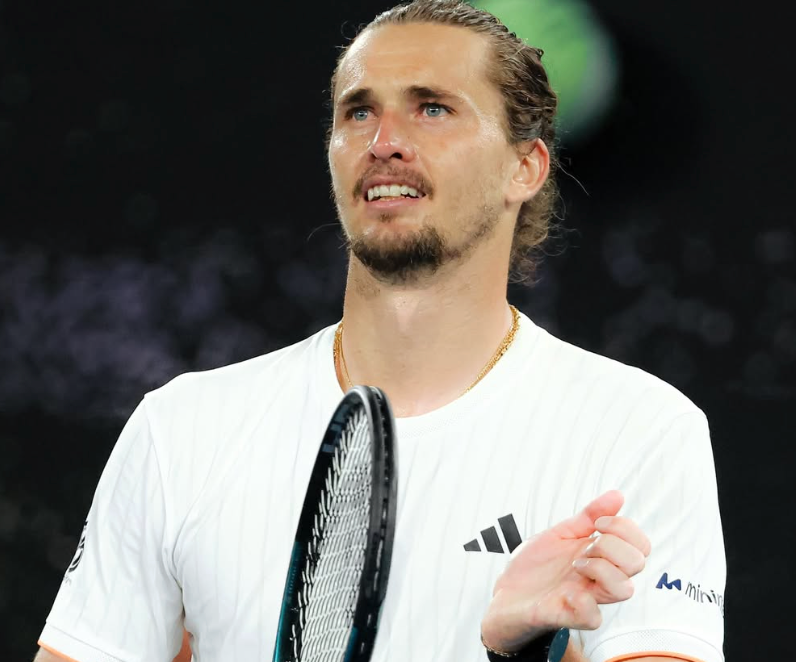
Zverev’s Grand Slam Dream With Diabetes
He said it during a public talk in Acapulco. It wasn’t a slogan. It was a summary of a journey that began when he was just four years old, when he was diagnosed with type 1 diabetes and doctors warned that elite sport might not be realistic.
Zverev never accepted that ceiling.
A Career Built Between Records and Reality
Now ranked No. 4 in the world and owner of 24 ATP titles, including multiple Masters 1000 trophies, Zverev has been one of the defining players of his generation. He has competed deep into Grand Slams, played ATP Finals, and stood across the net from the very best — Novak Djokovic, Carlos Alcaraz, Rafael Nadal.
But his challenge has never been purely tactical or physical.
Type 1 diabetes is not something that disappears once a match begins. It requires constant monitoring, blood sugar checks, and sometimes insulin injections — even during competition. In recent years, Zverev has been seen testing his glucose levels courtside, a moment that quietly says more about elite sport than most highlight reels ever could.
At tournaments like Roland Garros, specific clarifications had to be made to ensure he could manage his condition during matches without issue. Those administrative details may sound minor. They aren’t.
They represent the invisible layer of preparation behind every point he plays.
“Don’t Let It Define You”. Zverev’s Grand Slam Dream With Diabetes
Zverev’s message goes far beyond tennis.
“Diabetes doesn’t define me. I am who I am. I haven’t allowed this condition to control my life or my talent… Don’t let anyone tell you that you can’t. Don’t let this disease limit you.”
That mindset didn’t appear overnight. As a child, he was told high-performance sport could be too demanding. The physical strain, the travel, the stress — all of it could complicate glucose control.
Instead of stepping back, he leaned in.
And over time, he turned what many saw as a restriction into a platform.
Still Chasing the Major
For all his achievements, one box remains unchecked: a Grand Slam title.
He has come close. A US Open final. A Roland Garros final. Deep runs that confirmed his level. But the ultimate breakthrough hasn’t happened yet.
That’s what makes his statement about becoming the first Grand Slam champion with diabetes more powerful. It isn’t hypothetical. It’s attached to a real competitive window.
This isn’t a retired legend reflecting on what could have been.
It’s an active contender saying: this is possible.
More Than a Trophy
If Zverev lifts a Major trophy one day, the result will go far beyond his personal resume.
It would challenge assumptions about physical “perfection” in elite sport. It would send a message to young athletes managing chronic conditions that high-performance pathways are not automatically closed.
Through his foundation, Zverev already works with children and families living with diabetes. He doesn’t just speak about awareness. He invests in it.
And that matters.
Because representation in sport isn’t only about nationality or background. It’s also about health realities that often stay hidden.
The Discipline Behind the Scenes
Managing type 1 diabetes at the top of the ATP Tour means more than quick checks between games.
It means:
Constant monitoring during five-set matches.
Adjusting nutrition across time zones.
Balancing insulin levels with intense physical output.
Planning recovery with additional medical awareness.
Elite tennis is already one of the most demanding individual sports in the world. Add a chronic condition into that equation, and the margin for error narrows.
Yet Zverev has maintained consistency at the highest level for nearly a decade.
That consistency is not accidental. It’s structured discipline layered on top of natural talent.
Why His Dream Resonates
In a sport often framed around ideal physical profiles and flawless athleticism, Zverev’s story introduces nuance.
He is not defined by diabetes. But he doesn’t pretend it isn’t there.
His goal isn’t framed as defiance. It’s framed as possibility.
And that distinction matters.
If he eventually wins a Grand Slam, it won’t simply be a career milestone. It will stand as proof that elite performance and chronic conditions are not mutually exclusive.
That’s bigger than rankings.
Bigger than prize money.
Bigger than statistics.
It’s about expanding what people believe is achievable.
And that kind of victory, whether it comes this year or later, already carries weight beyond the trophy.