
Some titles add points.
Others change how the tour sees you.
What Flavio Cobolli did at the ATP 500 in Acapulco belongs firmly in the second category.
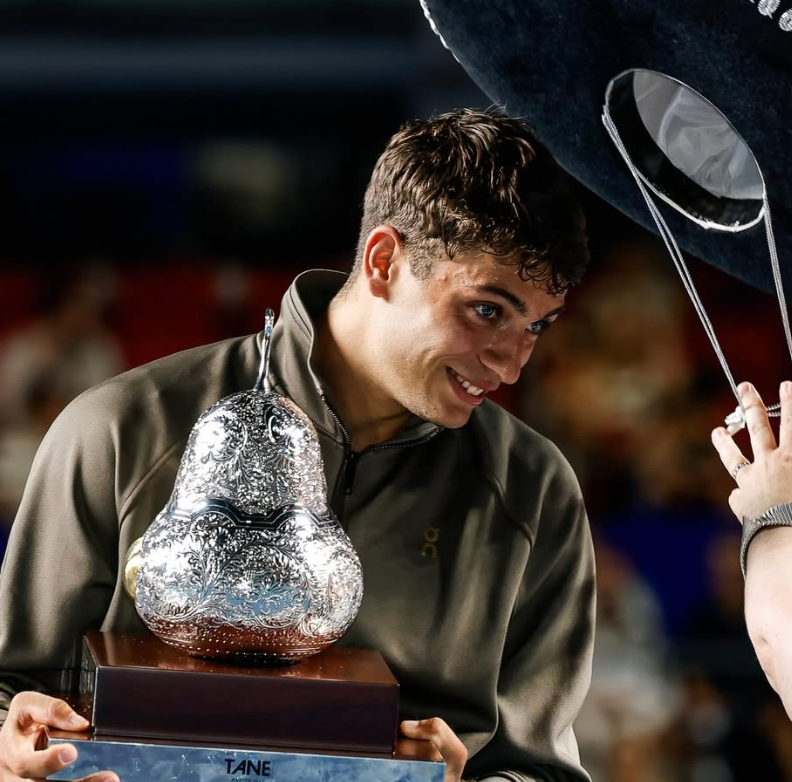
Cobolli wins Acapulco, shifts his narrative
The Italian defeated Frances Tiafoe 7-6(4), 6-4 in the final to claim the biggest hard-court title of his career. But this wasn’t just about lifting a trophy. It was about reshaping perception — about proving that he can sustain elite-level tennis across a full week on a surface that hasn’t always been considered his natural habitat.
And that’s where the real story lies.
It wasn’t a comfortable run. Cobolli wins Acapulco, shifts his narrative
Cobolli’s week in Mexico was anything but straightforward.
He opened the tournament with two tight tie-break sets against local wildcard Rodrigo Pacheco Méndez. Those are the matches that can derail a campaign early — fine margins, crowd energy, little room for error. Cobolli handled it with composure rather than flair.
In the second round, he raised his level against Dalibor Svrcina, showing more authority from the baseline. Then came the quarterfinal against Yibing Wu, where his depth and shot tolerance stood out. He didn’t rush points. He constructed them.
But the real examination arrived in the semifinals.
Against Miomir Kecmanovic, Cobolli was dragged into a physical, momentum-swinging battle that demanded both tactical clarity and emotional control. He won 7-6(5), 3-6, 6-4 — and more importantly, he looked steady when the match got complicated.
That has not always been the automatic assumption around him.
Acapulco started to feel bigger than just “a good week.”
The final: competitive maturity
Frances Tiafoe is no stranger to big stages. He brings experience, power, personality — and he tends to thrive in high-energy environments. He had just come through a gritty semifinal of his own.
The first set was tight. Few break chances. Strong serving on both sides. It felt inevitable that it would be decided in a tie-break.
That’s where Cobolli separated himself.
Not by hitting harder.
By choosing better.
In the key moments, he didn’t overpress. He resisted the temptation to go for low-percentage winners. Instead, he played heavy and deep, forcing Tiafoe to take the initiative — and absorb the risk.
The 7-6 set was a mental statement.
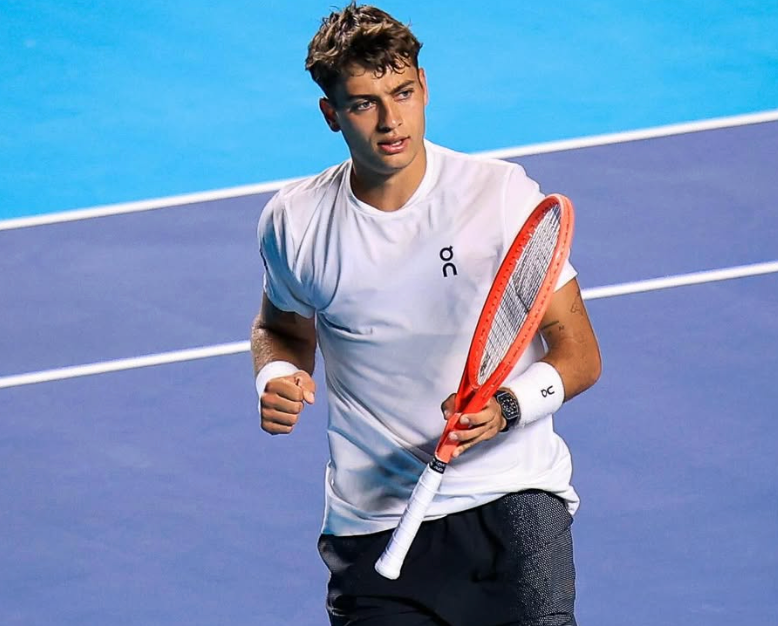
In the second, Cobolli found his opening at the right time. He secured a break and, crucially, did not lose structure afterward. No visible panic. No rushed decisions. He served it out 6-4 with clarity.
There was no theatrics.
Just control.
The detail that changes the narrative
Cobolli has long been viewed as a talented player, particularly on clay. Good mover. Heavy forehand. Smart competitor.
But questions lingered about his consistency on hard courts and his ability to close out bigger events.
Acapulco answers both.
Winning an ATP 500 on a fast surface — surviving tight matches and beating a player like Tiafoe in the final — shifts the conversation.
He’s no longer just a promising name.
He’s a player who can hold his level across five demanding matches.
The bigger impact
Beyond ranking points, this title injects belief.
ATP 500 events don’t fall into your hands. They require sustained focus, adaptability to conditions, and emotional resilience. Cobolli showed he can manage all three.
More interestingly, he did it away from clay.
That opens a different discussion: can he now become a regular presence in the latter stages of major hard-court tournaments?
What looked different
There were subtle but significant shifts in his game this week:
- Smarter shot selection in key moments
- Greater patience in extended rallies
- More stable body language in tie-breaks
- Better management of scoreboard pressure
This wasn’t a flashy week built on highlight reels.
It was a week built on decisions.
In today’s tour, where margins are razor-thin, that matters.
A real turning point?
Some tournaments act as launchpads.
If Cobolli maintains this competitive maturity over the next stretch of the season, Acapulco will be remembered as the week he stopped being labeled a “project” and started being viewed as a threat.
Because it’s not just about winning.
It’s about how you win.
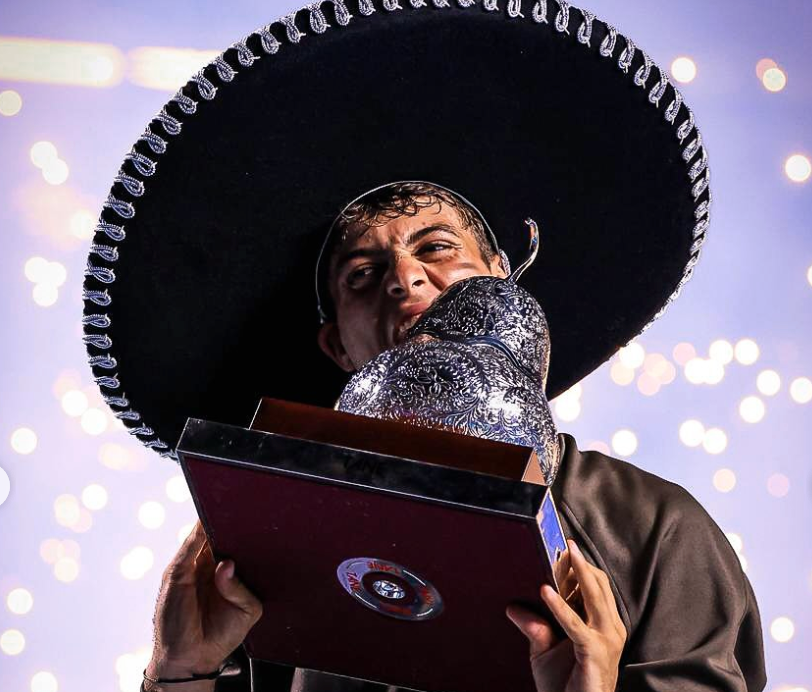
In Mexico, Cobolli didn’t rely on a perfect day. He relied on structure, composure, and intelligent tennis under pressure.
That’s growth.
And when a player proves he can grow on hard courts at this level, the rest of the tour starts paying closer attention.