
Luciano Darderi didn’t win the Chile Open on a hot streak.
He won it by design.
The Italian-Argentine lifted the title in Santiago after defeating Yannick Hanfmann 7-6(8-6), 7-5 in a final that demanded clarity in the tightest moments and composure when the margins were razor-thin.
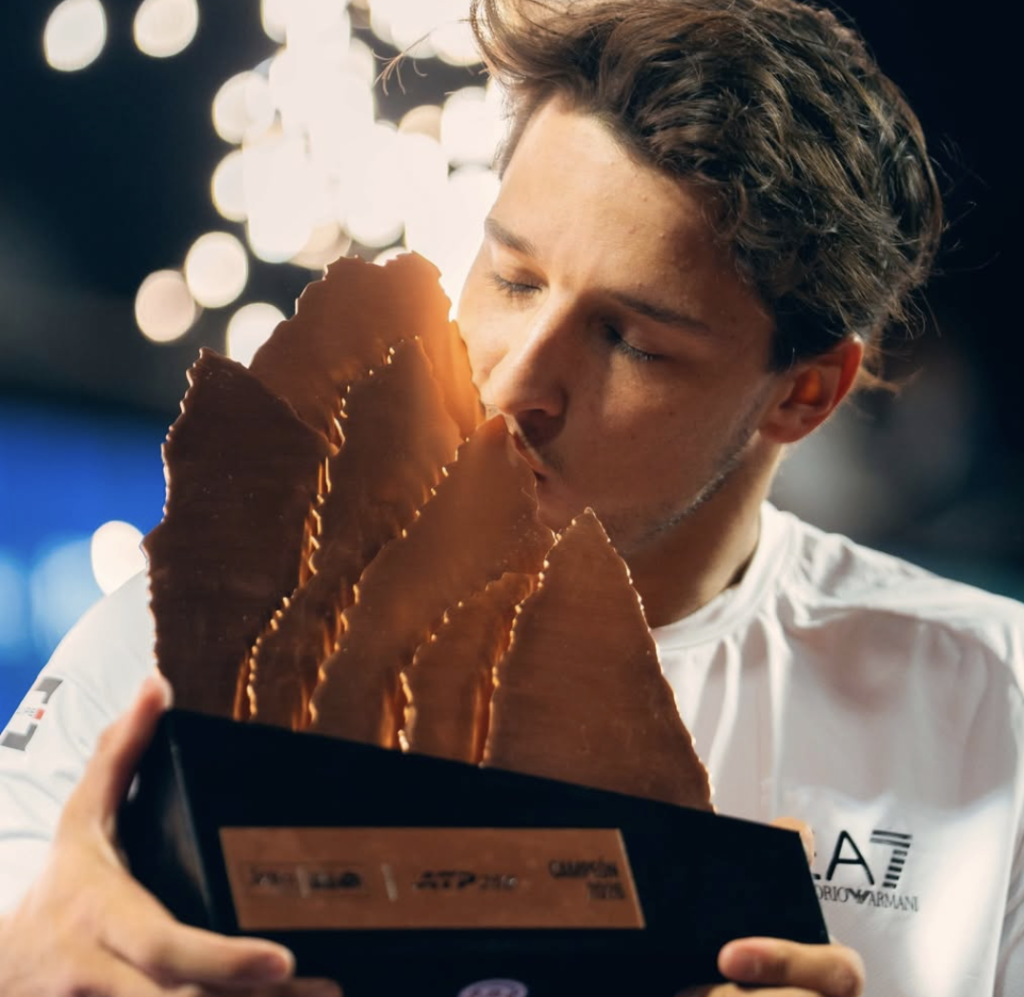
Darderi wins Chile Open with authority
There was no space for lapses. And Darderi played it like someone who understood exactly what the match required.
A final decided by discipline
From the first game, it was clear this wouldn’t be about flashy shot-making.
Hanfmann tried to dictate with his heavy forehand, looking to push Darderi back and flatten rallies. Darderi responded differently — not by overpowering him, but by managing depth and variation. He mixed height, altered spin, and refused to give the German the same ball twice.
Neither player dropped serve in the opening set.
The tie-break became the first real test.
And that’s where Darderi’s composure surfaced.
He didn’t overpress. He didn’t rush for low-percentage winners. He extended rallies just enough to force Hanfmann into risk. The 8-6 tie-break wasn’t spectacular — it was intelligent.
He closed it with controlled aggression, not emotion.
That difference matters.
The second set: patience under pressure
Hanfmann raised his intensity in the second set, shortening points and targeting Darderi’s backhand more directly. For stretches, it worked. The German found heavier first serves and tried to accelerate early in rallies.
But Darderi absorbed.
At 5-5, the match was balanced on instinct and decision-making.
That’s when Darderi made his move.
He stepped forward on returns, dictated with his cross-court forehand, and gradually squeezed errors out of Hanfmann. It wasn’t a sudden collapse from the German — it was sustained pressure.
The break came through construction, not impulse.
Serving for the title at 6-5, Darderi showed no hesitation. The 7-5 close was firm, clean, and emotionally steady.
No drama.
Just control.
A week that explains the title. Darderi wins Chile Open with authority
This wasn’t an easy draw.
In the second round, Darderi overcame Mariano Navone in three sets (6-3, 3-6, 6-4), adjusting after a dip in rhythm. In the quarterfinals, he defeated Andrea Pellegrino 6-3, 3-6, 6-2 in another match that required reset and recalibration.
The semifinal might have been the most telling performance.
He beat Sebastián Báez 6-4, 6-3 — a dangerous clay-court specialist — by stepping inside the baseline more often and refusing to get trapped in extended defensive exchanges.
That match hinted at something different.
Less reactive. More proactive.
Tactical growth on display
What stood out all week wasn’t just that Darderi won.
It was how he structured his points.
He relied heavily on the heavy cross-court forehand to open space before redirecting down the line. He used slice sparingly but effectively to disrupt rhythm. He resisted getting locked into predictable patterns against physically strong opponents.
In the final, especially, he didn’t try to hit harder than Hanfmann.
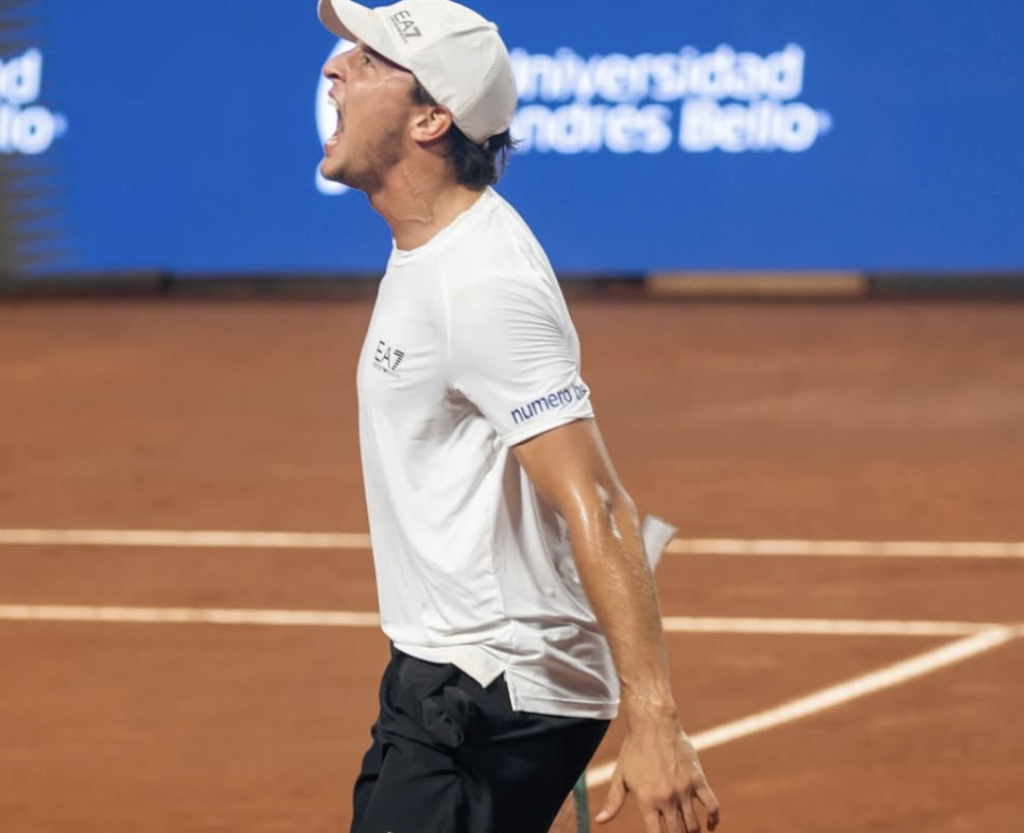
He tried to hit smarter.
That’s growth.
On clay in Santiago — a slower surface that rewards patience and physical endurance — those adjustments are critical. The altitude and varying conditions demand mental steadiness as much as shot tolerance.
Darderi showed both.
What this title means
The Chile Open isn’t just another ATP 250 on clay. It’s a tournament that exposes players who lose clarity under long rallies and scoreboard pressure.
Darderi passed that test.
Physically, he maintained intensity through the week. Mentally, he chose the right moments to attack. Strategically, he adapted mid-match instead of forcing patterns.
This title reinforces his identity as a legitimate clay-court competitor — but more importantly, it suggests evolution.
He’s learning how to win big matches without relying purely on momentum or emotion.
A step forward in his trajectory
Darderi didn’t win with fireworks.
He won with structure.
He won by managing the tie-break.
He won by identifying the decisive break opportunity.
He won by staying balanced when the match tightened.
In today’s tour, where matches often swing on a handful of points, that maturity is the separator between a good week and a champion’s week.
In Santiago, Luciano Darderi didn’t just lift a trophy.
He showed he knows how to build one.