
Cristina Bucsa arrived in Mérida carrying more questions than expectations.
Her season hadn’t quite clicked. Results were uneven, confidence fragile, and there’s a particular weight that builds when early losses start to feel connected. Every match begins to demand more than it should.
In one week, she flipped that narrative entirely.
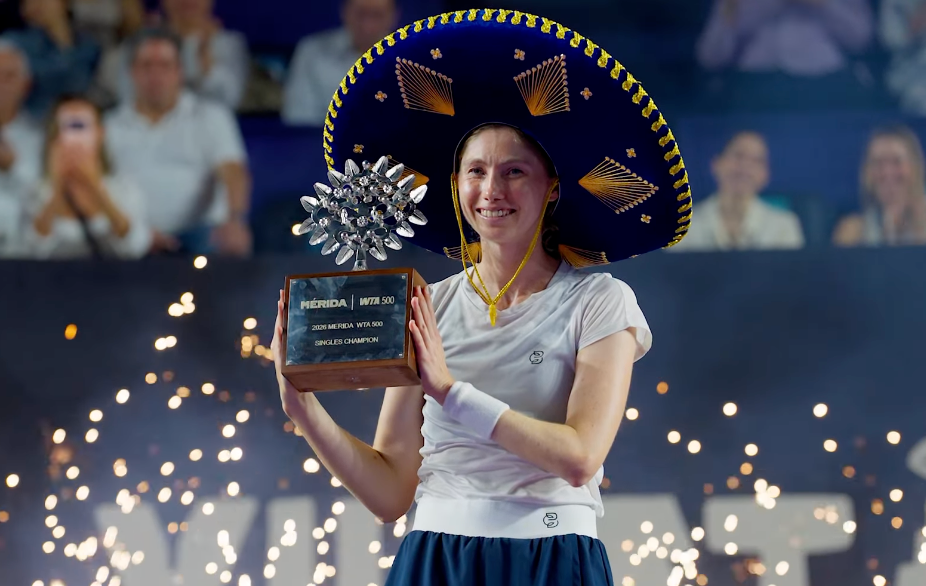
Bucsa wins Mérida double, breaks new ground
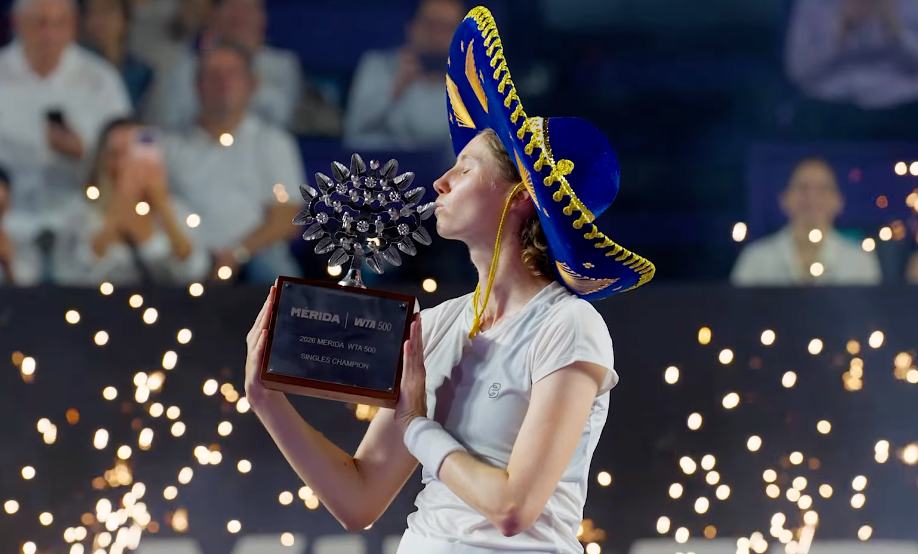
On Sunday, the Spaniard captured the biggest singles title of her career, defeating Magdalena Frech 6-1, 4-6, 6-4 to win the WTA 500 in Mérida. A few hours later, she was back on court — and lifted a second trophy, claiming the doubles title alongside Jiang Xinyu with a 6-4, 6-1 win over Isabelle Haverlag and Maia Lumsden.
Two trophies.
Nine total wins across singles and doubles.
One defining week.
This wasn’t momentum. It was breakthrough.
A final that refused to stay simple
Bucsa’s start in the singles final was nearly flawless.
She played assertive but controlled tennis, holding serve comfortably and dictating rallies with depth rather than raw power. Her forehand, when it lands clean, doesn’t scream — it pushes. It moves opponents back just enough to create space.
The 6-1 first set wasn’t a fluke. It was structure.
Frech looked rushed, slightly out of position, unable to settle into a pattern. Bucsa kept her pinned in neutral exchanges and chose her moments to redirect down the line.
But finals don’t stay obedient.
In the second set, Frech raised her level. She increased her first-serve percentage, flattened her groundstrokes, and changed trajectory to disrupt Bucsa’s rhythm. The Spaniard stopped controlling points quite as cleanly. The match turned physical.
Frech took it 6-4.
Suddenly, this wasn’t a cruise — it was survival.
The third set was about nerve. Bucsa wins Mérida double, breaks new ground
What stood out wasn’t Bucsa’s shot-making.
It was her restraint.
The deciding set was tight and heavy. Long rallies. Breathing harder. A scoreboard that felt louder with every game.
Instead of chasing quick points, Bucsa simplified her mindset: every point equals one point. Even the last one.
She resisted the temptation to rush. She kept returning deep through the middle to neutralize angles. She used height to reset tempo. And when the opportunity appeared late in the set, she took it.
The break came through patience, not panic.
Serving for the title, she stayed clear, steady, and closed it 6-4.
Not spectacular.
Mature.
Tactical clarity over power
Frech can be dangerous when she dictates early and accelerates cross-court exchanges. Bucsa avoided that trap.
She didn’t compete on pace.
She competed on order.
Heavy, deep balls to the center to limit geometry.
Directional changes only when the court truly opened.
Smart use of variation to prevent rhythm.
It wasn’t flashy tennis. It was applied tennis.
The Paolini win that changed the week
To understand the magnitude of this title, you have to rewind 24 hours.
In the semifinals, Bucsa defeated Jasmine Paolini 7-5, 6-4 — her first career win over a Top 10 opponent. That match was more than a result; it was a psychological unlock.
Once she proved she could beat someone at that level, the tone shifted.
She walked into the final believing she belonged there.
That belief showed in the third set.
Doubles: no time to breathe
The remarkable part?
She wasn’t finished.
Just hours after winning the singles title, Bucsa returned for the doubles final with Jiang Xinyu. Fatigue could have been an excuse. Instead, clarity carried her again.
They defeated Haverlag and Lumsden 6-4, 6-1 in a match that was direct and efficient. Bucsa was sharp at the net, decisive on returns, and tactically aware — crucial traits when legs are heavy.
In modern tennis, winning both singles and doubles in the same tournament — on the same day — is rare.
Doing it after a three-set singles final is rarer still.
What Mérida means
This week changes scale.
Bucsa was already respected on tour, particularly in doubles. But in singles, she hadn’t yet had the defining week — the one that shifts perception and builds internal certainty.
Mérida was that week.
Five consecutive singles wins.
A Top 10 victory.
A composed three-set final.
A doubles title layered on top.
Not built on brilliance. Built on insistence.
In professional tennis, breakthroughs rarely come from a single magical shot. They come from staying when quitting feels easier. From showing up when momentum is absent.
In Mérida, Cristina Bucsa didn’t just win matches.
She changed her trajectory.