
Indian Wells hasn’t even begun, and Carlos Alcaraz already has a serious test ahead.
The draw did him no favors. This isn’t the kind of bracket that allows a top seed to ease into rhythm. It’s a path that demands sharpness from the very first ball — and if projections hold, it could lead to a blockbuster semifinal against Novak Djokovic.
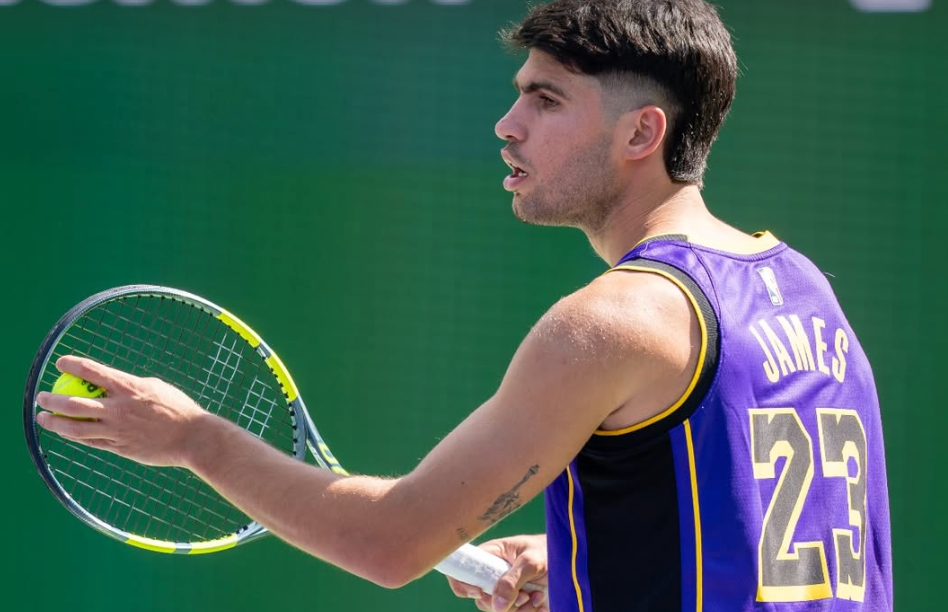
Alcaraz faces tough Indian Wells draw
In the California desert, there’s rarely time to settle. This year, even less.
A tricky opener: Atmane or Dimitrov
Alcaraz will begin his campaign in the second round against either Terence Atmane or Grigor Dimitrov.
If it’s Dimitrov, the debut becomes immediately complicated.
The Bulgarian remains one of the most tactically nuanced players on tour. When he’s loose, he’s disruptive. He changes pace, mixes slice, flattens the backhand down the line, and uses height intelligently — all tools that can be particularly effective on Indian Wells’ slower hard courts, where rallies are constructed rather than rushed.
Dimitrov doesn’t need to dominate to stay competitive. He only needs to break rhythm. And rhythm is something Alcaraz thrives on. The Spaniard is at his best when exchanges are dynamic, explosive, and open-court. When points become chess matches rather than track meets, margins narrow.
If Atmane advances instead, the challenge is different — but not easier.
Young, aggressive, and playing without expectation, Atmane would arrive with freedom. Players in that profile can be dangerous in early rounds of big events because they swing boldly and carry no psychological burden. They don’t overcalculate. They don’t wait.
There is no comfortable scenario here.
Indian Wells is not a typical hard court
To understand the challenge, you have to understand the surface.
Indian Wells is technically hard court — but it plays slow. The ball jumps high. The air is dry. The physical toll builds over long rallies. You don’t win here by blasting through service games alone.
You win by sustaining intensity.
Alcaraz historically adapts well to these conditions. His defensive coverage, his ability to transition from neutral to offense in a single step, and his comfort with extended rallies are all advantages here.
But this tournament punishes lapses.
One distracted set can flip a match. One dip in first-serve percentage can turn into a break deficit that’s hard to recover on a surface where returning is more effective than usual.
With this kind of draw, there’s no room for slow starts.
The middle rounds won’t be forgiving. Alcaraz faces tough Indian Wells draw
Even beyond the opener, Alcaraz’s section carries depth.
Indian Wells rarely produces fluke semifinalists. The surface rewards players who are tactically disciplined and physically consistent across multiple matches. You need four or five high-level performances in a row — not just one explosive day.
That’s where the real challenge lies.
Alcaraz is capable of brilliance. But Indian Wells demands continuity.
It’s not about highlights. It’s about repetition.
Djokovic in the projected semifinal
The storyline that adds real tension to the draw is the potential semifinal against Novak Djokovic.
If both advance according to seeding, they would meet before the final — a clash that would instantly become the focal point of the tournament.
Djokovic, even at 38, remains one of the most complete competitors in tennis. On slower surfaces, his return becomes even more punishing. His ability to absorb pace, extend rallies, and turn defensive positions into counterattacks is uniquely suited to Indian Wells conditions.
Matches between Alcaraz and Djokovic are rarely straightforward.
They’re layered.
They evolve.
They hinge on small tactical adjustments.
On a court where physical endurance and mental precision matter equally, that hypothetical semifinal would test everything — endurance, shot tolerance, decision-making under pressure.
It would not be a fireworks match.
It would be a chess match at sprint speed.
What’s really at stake for Alcaraz
Indian Wells marks the beginning of the critical North American stretch of the season. A deep run here sets tone and momentum. An early exit forces recalibration before Miami and the clay swing.
Alcaraz arrives labeled as a favorite — something he has grown accustomed to. But when the draw offers no soft entry point, mental readiness becomes as important as physical preparation.
He cannot afford to “play into” form.
He has to arrive ready.
From the first return game, from the first service hold, from the first tight scoreboard moment.
There is no easing in this year.
A tournament that defines state of mind
Indian Wells doesn’t always crown the most explosive player.
It crowns the most stable one.
Alcaraz has every tool required for this surface — power, court coverage, touch, creativity. But this particular draw demands something subtler: emotional steadiness.
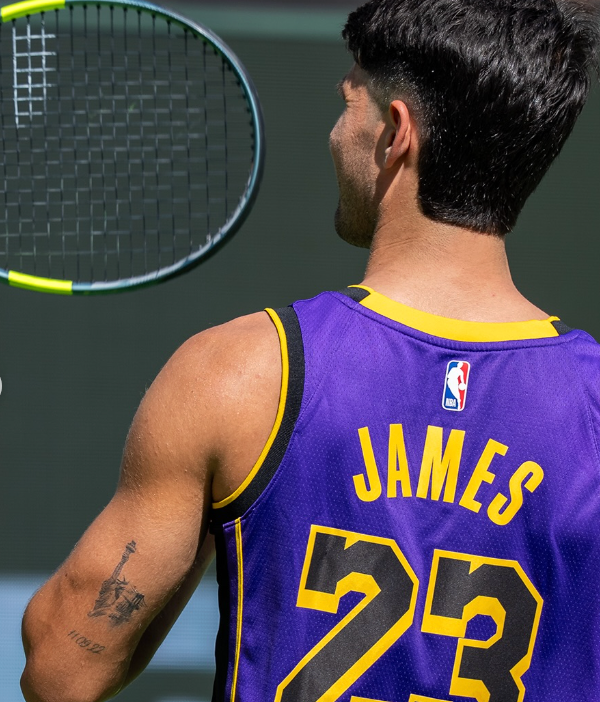
If he handles the opener cleanly, confidence can build quickly. If the early rounds stretch physically or mentally, that cost accumulates before the projected heavyweight clashes.
The path is demanding.
Not impossible — but demanding.
And in tournaments like this, the difference rarely lies in talent alone.
It lies in the ability to sustain it, day after day, under pressure.
For Carlos Alcaraz, that challenge starts now.