
Carlos Alcaraz closed out a flawless week at the Qatar ExxonMobil Open with a statement performance in the final, defeating Arthur Fils 6-2, 6-1 in just 50 minutes to claim the ATP 500 Doha title. It was not simply a win — it was control from start to finish. Alcaraz won 89% of points behind his first serve and did not face a single break point.
Those numbers don’t decorate the story. They define it.
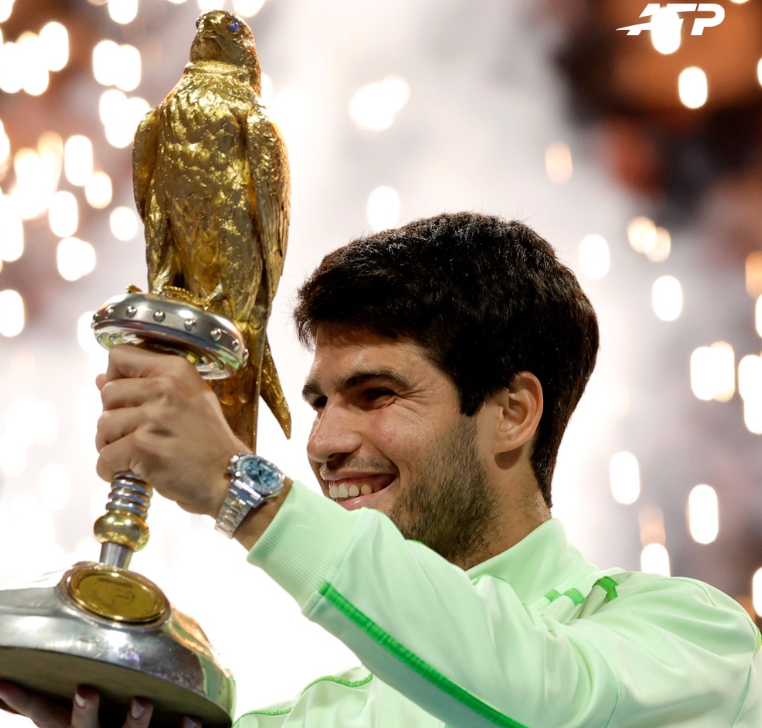
Alcaraz Wins Doha With Dominant Final
The trophy confirms something that has been building since Australia: Alcaraz is operating in long-season mode. Not frantic. Not emotional. Structured. Clear.
And when that version of Alcaraz appears, matches don’t become contests. They become statements.
A Final Decided From the First Game. Alcaraz Wins Doha With Dominant Final
The opening exchanges already carried a message: this would not be a negotiation.
Alcaraz immediately imposed depth on the return, pinned Fils behind the baseline, and removed the Frenchman’s ability to dictate with his first forehand. On fast courts, power players depend on short points and early control. Fils never found that comfort zone.
The first set, 6-2, was the natural consequence of two elements:
- Alcaraz held serve without stress.
- Every time Fils tried to accelerate, he ran into one more ball — and that “one more” wasn’t passive defense. It was disguised pressure.
Fils is dangerous when he establishes first-strike tennis. Instead, he was constantly reacting.
When that dynamic settles early in a final, the psychological slope becomes steep. Fils was climbing from the second game onward.
Why Fils Never Entered the Match
Arthur Fils arrived in Doha with real momentum. His semifinal victory over Jakub Mensik confirmed his indoor development and competitive maturity. But facing Alcaraz at this level exposes something very specific: you must play complete tennis, point after point.
Fils thrives when rallies are short and linear. Alcaraz refused that script.
He returned deep. He changed height. He redirected crosscourt exchanges down the line at the right moment. He varied rhythm without losing aggression.
The result showed not only on the scoreboard but in body language. Fils grew visibly frustrated late in the match because there was no tactical door opening. Every attempt at acceleration was absorbed and redirected.
This wasn’t about Fils playing poorly. It was about Alcaraz removing oxygen.
The Stat That Explains Everything
Some statistics embellish. Others explain.
Alcaraz facing zero break points in an ATP 500 final is not cosmetic — it reveals structural dominance.
First, his serve was not merely solid; it was foundational. Winning 89% of first-serve points allowed him to play from ahead constantly.
Second, it meant he never had to defend momentum. The final was played entirely in his preferred territory: controlling tempo rather than chasing it.
Reuters highlighted both the 89% first-serve efficiency and the 50-minute duration. That combination does not happen accidentally in a final. It reflects clarity of plan and ruthless execution.
The Tournament Context Matters
Doha did not hand Alcaraz a simple path.
In the semifinals, he defeated defending champion Andrey Rublev 7-6(3), 6-4 — a much tighter battle than the straight-sets score suggests. He needed six match points to close it and had to manage genuine tension late.
Fils, meanwhile, reached the final by beating Mensik 6-4, 7-6(4), maintaining composure in a tight second-set tiebreak.
Both players suffered the day before. Only one looked free today.
That contrast matters.
Sometimes, the player who navigates turbulence in the semifinal emerges sharper. Sometimes, the emotional cost lingers. In this case, Alcaraz translated his semifinal stress into final-day clarity.
What Doha Means for Alcaraz in 2026
The Doha title is his second of the season, following his Australian Open triumph just weeks earlier. His record now stands at 12-0 to begin the year.
But beyond the numbers, something more significant stands out: the maturity of his tennis.
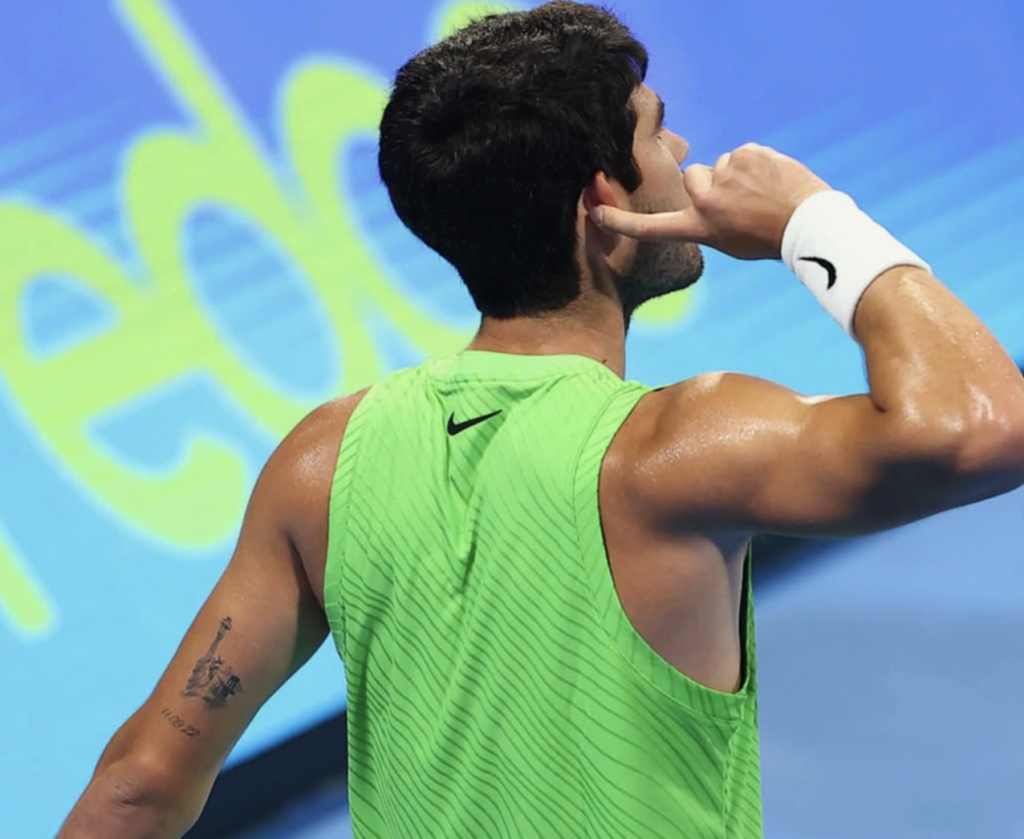
In Doha, Alcaraz did not rely on spectacular highlights. He chose correct risks. He controlled center positioning. He simplified complex situations.
ATP Tour coverage described it as completing unfinished business in Doha, with a “mature” version of Alcaraz showing no lapses.
That word — mature — is important.
The younger Alcaraz overwhelmed with intensity and improvisation. This version overwhelms with logic.
For Fils: A Defeat That Still Elevates
Losing a final 6-2, 6-1 is never comfortable. But context matters.
Reaching an ATP 500 final indoors confirms Fils’ upward trajectory. His week included high-level wins and sustained performance across multiple rounds.
Today’s problem was not inexperience alone. It was the absence of alternative solutions.
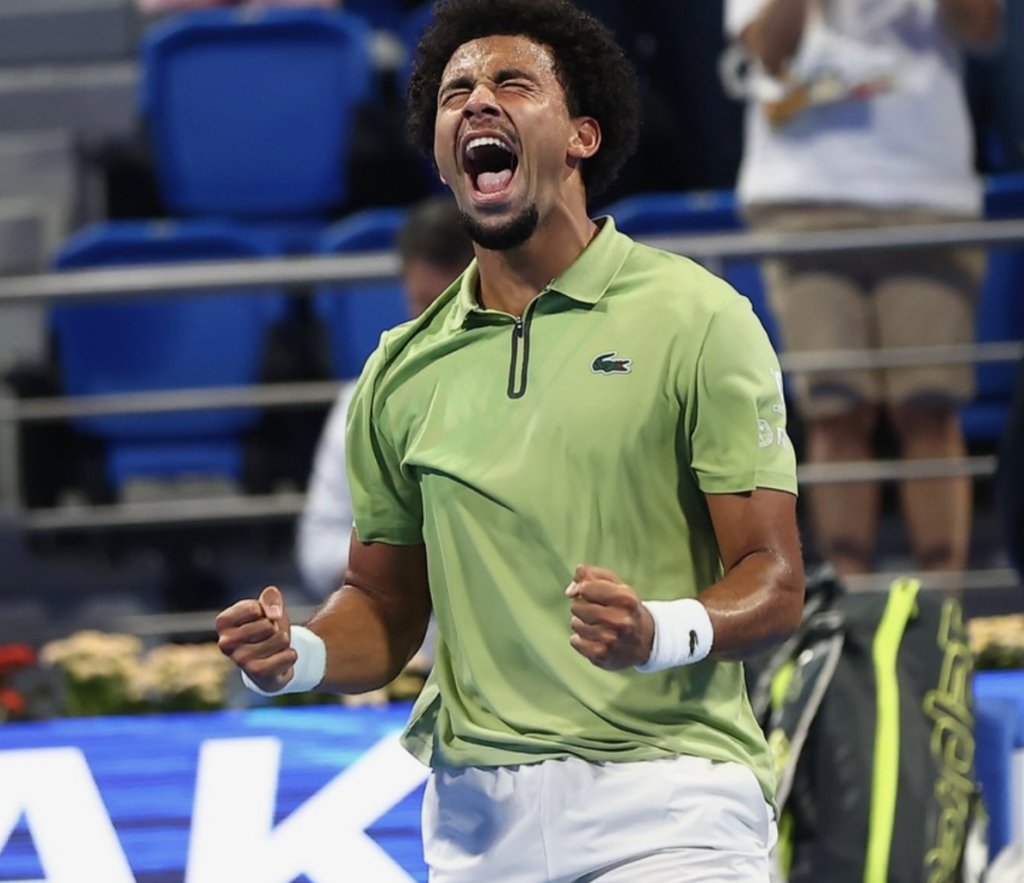
To defeat a world No. 1 playing at this level, power is insufficient. You need layers: Plan B, Plan C, emotional steadiness when momentum shifts.
Fils leaves Doha with a loss — but also with clarity about the next step.
Doha Sends a Clear Message
The Qatar Open ended quickly. But it did not end quietly.
Alcaraz is not just winning. He is winning cleanly, without argument, with a version of his tennis that is increasingly difficult to destabilize.
Doha confirms him as champion.
And it leaves the rest of the tour with the same conclusion: playing well will not be enough. Against this version of Alcaraz, perfection must be sustained — not flashed.