
Professional tennis often projects an image of precision — a world built on tight schedules, business-class flights, and seamless logistics. But this week in Dubai, reality looked very different.
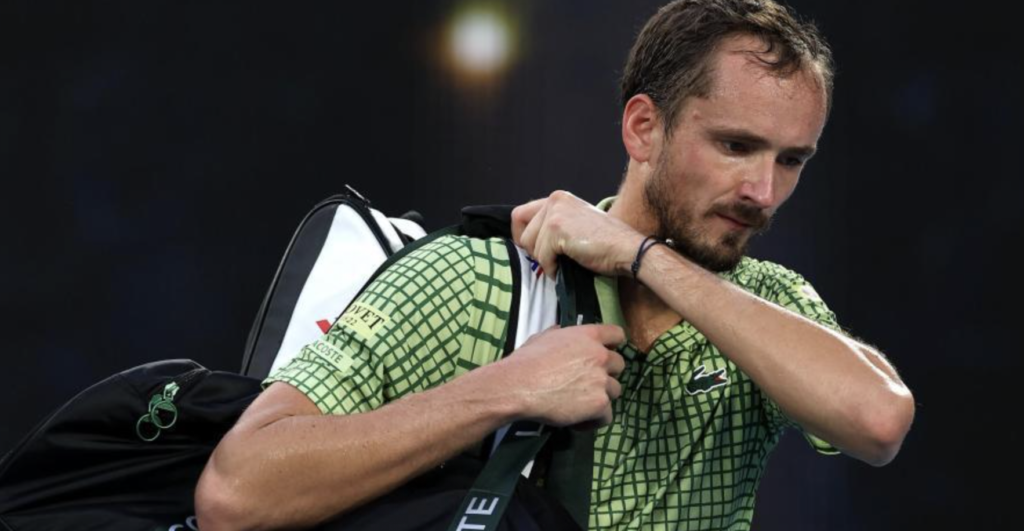
Dubai airspace chaos strands ATP stars
Since Saturday, the emirate’s airspace has been closed due to regional security concerns, leaving several ATP players effectively stranded. Among them are Daniil Medvedev, Tallon Griekspoor, and Andrey Rublev in singles, along with top doubles names such as Marcelo Arévalo, Mate Pavić, Harri Heliövaara, and Henry Patten.
It’s an unusual scene — especially in a city known for operating like clockwork.
The tournament ended. The travel didn’t. Dubai airspace chaos strands ATP stars
The ATP 500 in Dubai had already concluded when news broke that the airspace would remain closed. What initially appeared to be a temporary disruption extended for hours, grounding commercial and private flights alike.
For players, the consequences are immediate.
In today’s tour structure, there is barely any downtime between events. Most competitors had onward travel booked — some to continue the hard-court swing, others to begin preparation for upcoming Masters 1000 tournaments. A delay of even 24 to 48 hours can disrupt training blocks, recovery cycles, and media or sponsor obligations.
Medvedev, fresh off his title run, was expected to continue his schedule without interruption. Griekspoor and Rublev also had commitments ahead. In doubles, Arévalo and Pavić had just contested the final, while Heliövaara and Patten completed a physically demanding week.
The tour moves forward regardless.
Players who don’t.
The invisible pressure of logistics
When people talk about tennis fatigue, they usually mean five-set battles or muscle strains.
But travel is its own form of wear and tear.
A player unable to leave a country doesn’t just miss a flight. He loses structured training days. He loses adaptation time to new weather, new time zones, new court speeds. He may even lose recovery windows carefully planned by fitness teams.
Over an eleven-month season, every day is calibrated.
Ironically, Medvedev had recently spoken publicly about the physical and mental toll of the packed calendar. This time, the disruption has nothing to do with match load. It’s geopolitical.
And that makes it unpredictable.
Doubles teams feel it even more
For doubles specialists, the impact can be sharper.
Pairs often compete in back-to-back tournaments without the same recovery gaps singles players sometimes build into their schedules. Coordination, reflexes, and rhythm are delicate elements — easily affected by fatigue or travel stress.
Marcelo Arévalo and Mate Pavić, one of the most consistent teams on tour, had played deep into the week. Harri Heliövaara and Henry Patten are building momentum as a partnership and rely heavily on continuity.
Uncertainty interrupts rhythm.
And rhythm matters in doubles.
The human side of being stranded
Beyond ranking points and draws, there is a basic reality: uncertainty creates stress.
These are not vacationers waiting out a delay. They are elite athletes operating within tightly managed systems — with coaches, physios, sponsorship commitments, and competitive timelines.
A sudden halt in mobility affects everyone around them.
The inability to know when air traffic will resume complicates planning. Should they train fully? Rest? Conserve energy? Rebook to alternative airports? Move by ground transport if possible?
There is no template for this scenario.
What happens next?
The immediate goal is simple: leave as soon as flights resume.
In some cases, teams may explore alternative routes through neighboring countries, depending on security and regulatory clearance. But those options are limited and require coordination.
In the meantime, players are doing what they can: light sessions, hotel gym work, controlled hitting if facilities remain accessible.
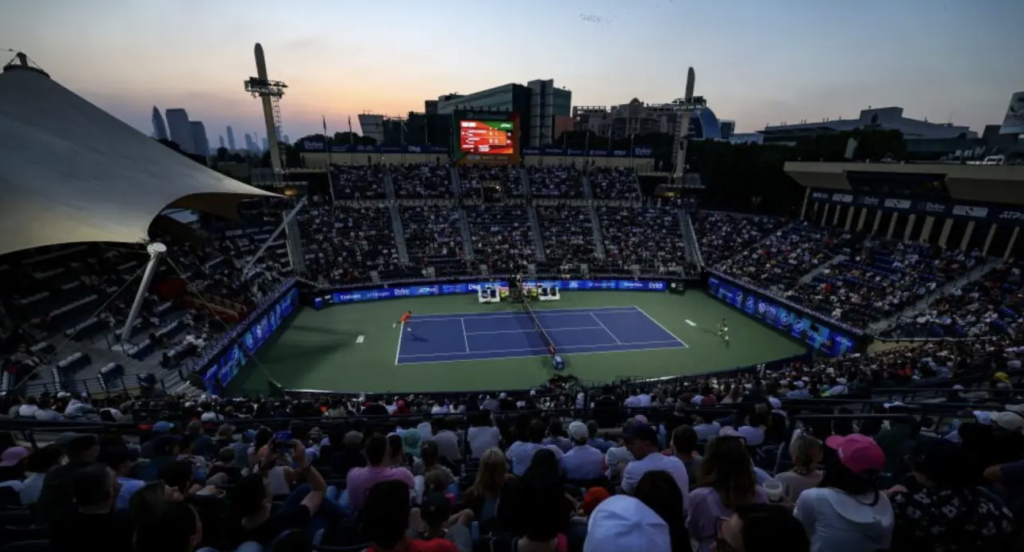
Because the calendar does not pause.
Next week’s draw is already set elsewhere. Whoever manages to leave will have to adjust quickly — potentially landing only a day or two before their next match.
A reminder of tennis’ fragile structure
The ATP Tour is accustomed to dealing with rain delays, scheduling shifts, even pandemic-era travel restrictions. But being grounded by sudden airspace closures adds another layer to the already complex life of a touring professional.
This time, there is no tactical adjustment to solve it.
No tie-break strategy.
No medical timeout.
It’s simply waiting.
Dubai’s courts are quiet now. The trophies have been handed out.
But for several of the tour’s biggest names, the week isn’t over.
They’re still there — bags packed, rackets ready — waiting for clearance to take off.