
Some titles are won with clean tennis.
Others are won with something deeper.
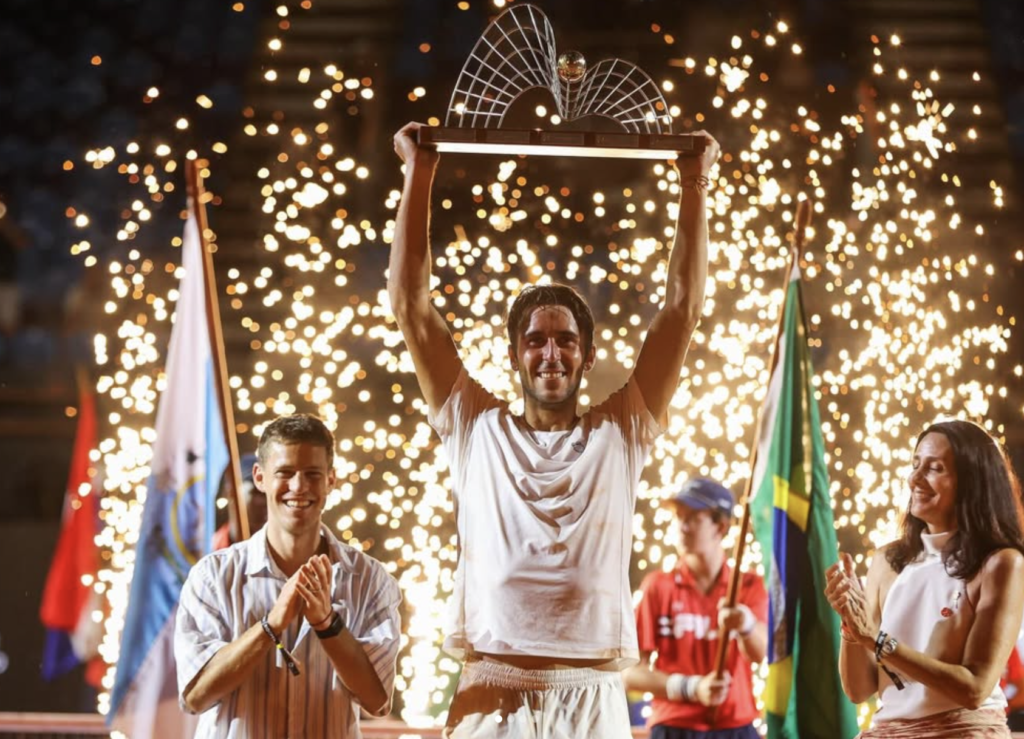
Etcheverry Claims Epic Rio Title
What Tomás Etcheverry did in Rio de Janeiro was not just lift his first ATP trophy. He completed one of those rare sporting arcs that feel almost scripted: a marathon semifinal, physical collapse, barely two hours of rest… and then a final that, on paper, he probably shouldn’t have had the legs to win.
And yet he did.
The Final After the Storm
The backdrop made everything heavier.
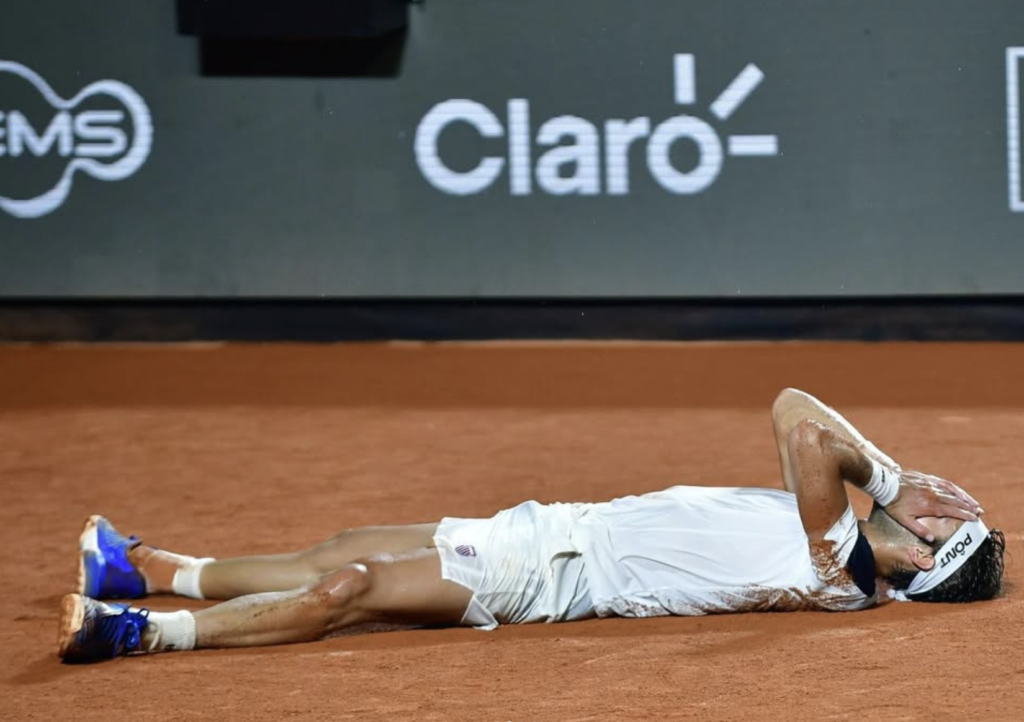
Etcheverry had just survived a semifinal that stretched across nearly four hours of play and more than 20 hours in real time due to rain delays and brutal heat. He had finished that match flat on his back, physically emptied.
Two hours later, he was back on court to face Alejandro Tabilo for the ATP 500 title.
The question wasn’t who had the better tennis.
It was who could still move.
But Etcheverry didn’t walk into the final trying to endure it. He walked in trying to win it.
From the opening games, it was clear he wasn’t interested in another war of attrition. He shortened points when he could. He served with purpose. He picked moments to step inside the baseline rather than grinding endlessly from behind it.
It wasn’t flashy. It was efficient.
And efficiency, after a week like that, is intelligence.
The Game That Shifted the Match. Etcheverry Claims Epic Rio Title
Matches like this usually turn on one moment.
In the second set, with the score tight and fatigue starting to whisper in his legs, Etcheverry faced a long, draining service game. Break points against. Extended rallies. Defensive scrambles.
He held.
Not with desperation, but with clarity. He absorbed pressure, stayed composed, and closed the game with a clean forehand winner that clipped the line.
That was the pivot.
From that moment, the match stopped being about endurance and became about belief.
Tabilo realized the player across the net wasn’t fading. He wasn’t surviving. He was fully convinced he could finish it.
And when a tired player shows conviction instead of fragility, it changes the emotional balance of the court.
A Different Version of Etcheverry
Etcheverry has built his reputation on solidity. Heavy topspin. Relentless depth. Baseline pressure. He’s rarely the highlight machine in a draw, but he’s hard to break down.
In Rio, he added something important: timing.
Instead of simply staying in rallies, he chose his moments to accelerate. He didn’t overhit. He didn’t force low-percentage shots. But when the opening came, he took it.
That’s growth.
Winning an ATP 500 isn’t about playing well for long stretches. It’s about recognizing when the match needs to be closed and having the nerve to do it.
He did.
Why This Title Matters
This isn’t just a first ATP trophy.
It’s a first ATP trophy earned the hard way.
On clay.
In South America.
After physical depletion.
Under pressure.
Plenty of players have strong weeks. Fewer can survive a semifinal like that and still show up with tactical clarity 120 minutes later.
That’s the real takeaway.
He didn’t win because he had more energy. He won because he managed what he had better.
That reframes him.
He’s no longer just a dependable clay-court grinder. He’s a player who has proven he can carry emotional and physical stress deep into a tournament and still execute.
The Message Beyond Rio
Rio is not a soft 500. It demands legs, patience, and mental stability. Winning there sends a signal.
The tour is filled with talent and power. But not everyone handles extreme weeks well. Not everyone can recover mentally from a draining battle and step into a final with composure.
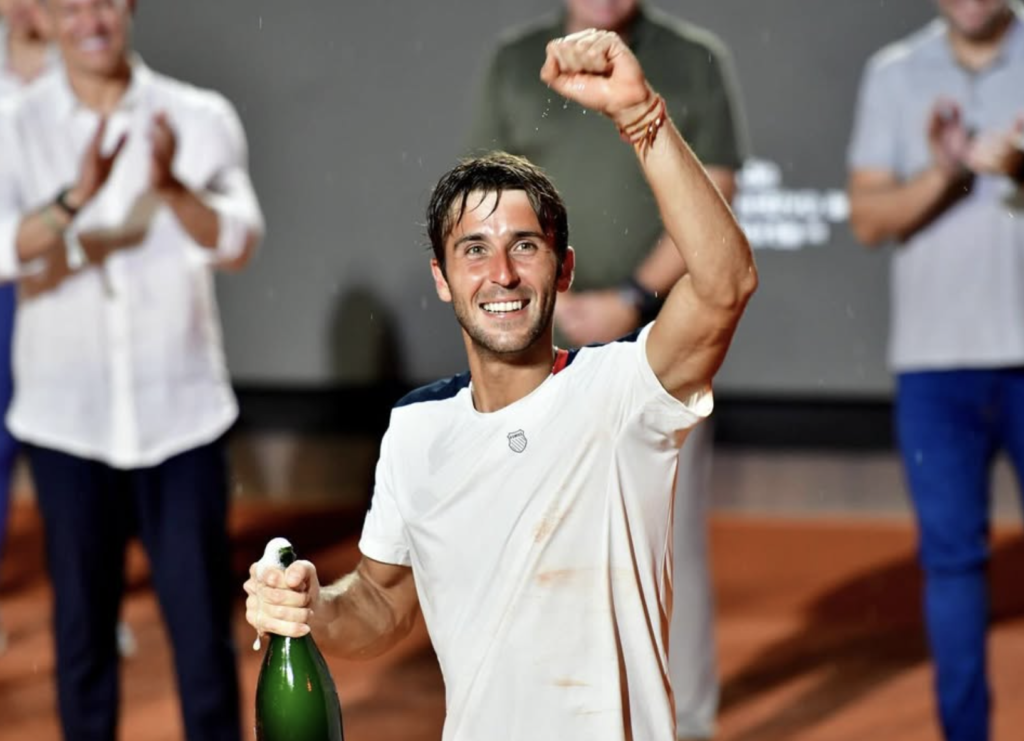
Etcheverry did.
And that might be more important than the trophy itself.
The Image That Stays
The strongest image isn’t the final handshake.
It’s the contrast.
From lying flat on the court after the semifinal…
To lifting a trophy hours later.
That’s not just tennis.
That’s character.
And in this sport, character tends to show up before bigger breakthroughs.
If he builds on this, Rio won’t just be remembered as his first ATP title.
It may be remembered as the moment he shifted from solid contender to real threat in bigger tournaments.