
Novak Djokovic has nothing left to prove in professional tennis. By every objective measure, the Serbian is already a legend of the sport, having defined an era alongside Rafael Nadal, Roger Federer and Andy Murray—an era in which success was never guaranteed and dominance had to be earned repeatedly. What has always set Djokovic apart, however, is not only his technical excellence, but a mental resilience matched by exceptional physical preparation.
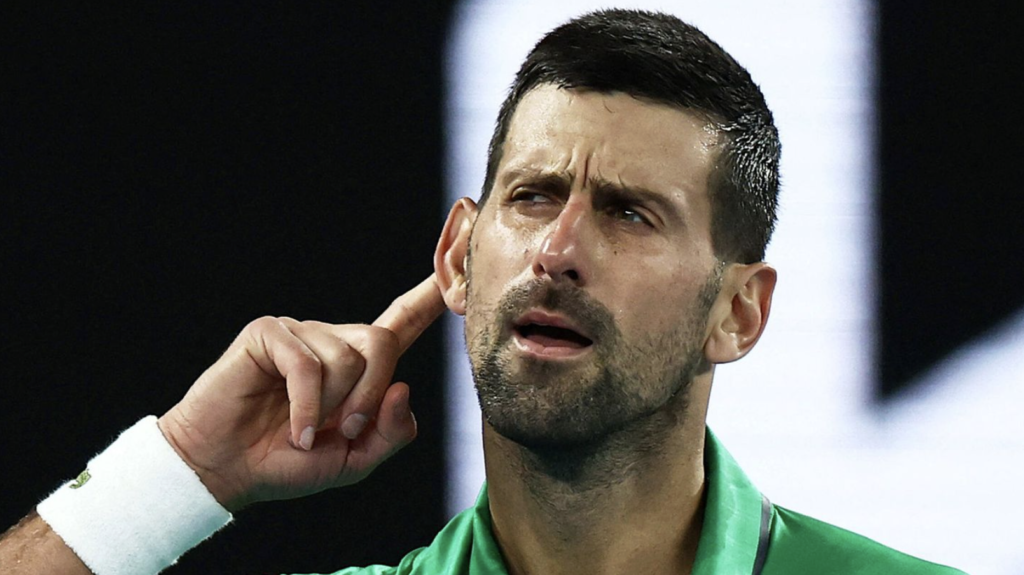
(Reuters/Tingshu Wang)
At 38 years old and with 101 career titles to his name, Djokovic has set himself one final, highly ambitious goal: capturing a 25th Grand Slam title. After more than two seasons without lifting a major trophy, he knows that the challenge is greater than ever. Younger rivals such as Carlos Alcaraz and Jannik Sinner, armed with speed, power and momentum, have emerged as the leading contenders. Still, Djokovic has no intention of stepping aside quietly. Instead, he has chosen to adapt.
The past two seasons forced a moment of clarity. Djokovic recognized that his once-clear physical edge had narrowed and that stopping the new generation was no longer automatic. Alcaraz and Sinner shared all eight Grand Slam titles across the last two years, prompting the Serbian to rethink his approach. Fewer tournaments, more targeted preparation—and a strategic addition to his team.
That addition was Mark Kovacs, a sports medicine specialist with extensive expertise in tennis performance. Kovacs’ role goes far beyond traditional fitness coaching. He closely monitors every physical variable affecting Djokovic, from recovery and workload to efficiency of movement, with the aim of maximizing performance while minimizing wear and tear. The objective is simple but demanding: ensure Djokovic reaches the decisive stages of major tournaments in peak physical condition.
Djokovic had already hinted before the Australian Open that his plan was to build form progressively, improving with each round rather than peaking too early. So far, the strategy has paid off. Alongside Alcaraz, he is the only player in the draw not to have dropped a set—although his path included a walkover into the quarterfinals following Jakub Mensik’s withdrawal due to injury.
Now comes the true test. Djokovic arrives at the latter stages of the tournament confident and, more importantly, convinced that his body is responding better than it has in years. Beyond extending his legacy, the Australian Open represents something even more symbolic: the chance to move past Margaret Court and stand alone atop the all-time Grand Slam list.
“I feel really good, especially physically,” Djokovic said after defeating Botic van de Zandschulp. “Honestly, I think this is one of the best physical periods I’ve had in a long time. I expected it, considering how much time I had to rest and prepare for this Grand Slam. Everything has come together naturally.”
Observers have noted the difference. Djokovic looks sharper, more explosive, and noticeably more energetic than in recent seasons—changes that reflect the impact of Kovacs’ arrival. Whether that renewed edge will be enough to carry him past Lorenzo Musetti in the quarterfinals and beyond remains to be seen. What is clear, however, is that Djokovic’s pursuit of history in Melbourne is far from symbolic. This time, it is backed by a carefully designed plan—and a body that once again seems ready to believe in it.