
Mboko shocks Doha: stuns Rybakina, survives Andreeva and charges into the Top 10 race.
The Qatar TotalEnergies Open has found an unexpected — though increasingly convincing — protagonist in Victoria Mboko. The Canadian has delivered one of the most significant weeks of her career: first holding her nerve against rising star Mirra Andreeva in a high-intensity battle that keeps her firmly in the conversation for a Top 10 breakthrough, and then defeating Grand Slam champion Elena Rybakina, one of the tournament’s top contenders.
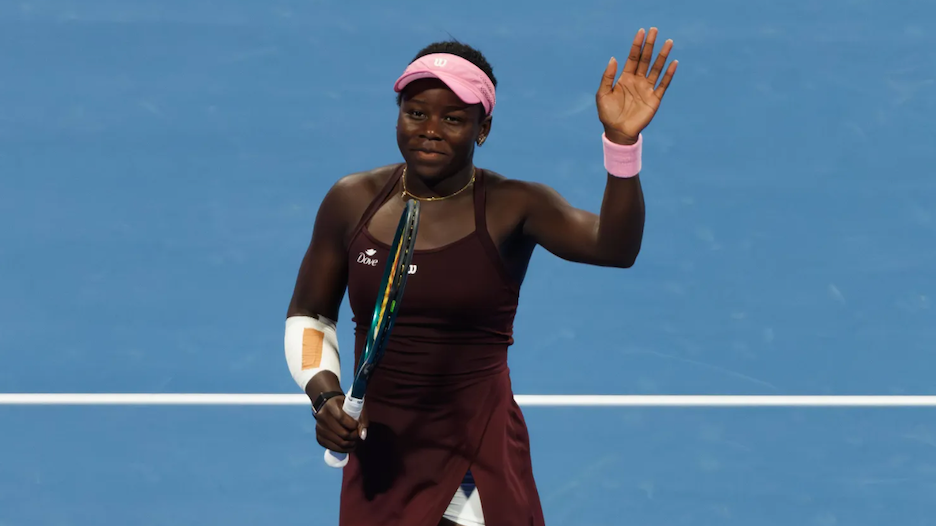
This is not merely a streak of good results. It is a week that signals evolution.
The win that shifts perception: Rybakina
The victory over Rybakina marked the true competitive turning point. On a surface that typically rewards aggressive, first-strike tennis, Mboko did not retreat. She matched power with structure, neutralized the Kazakh’s serve and imposed her own baseline patterns with surprising maturity.
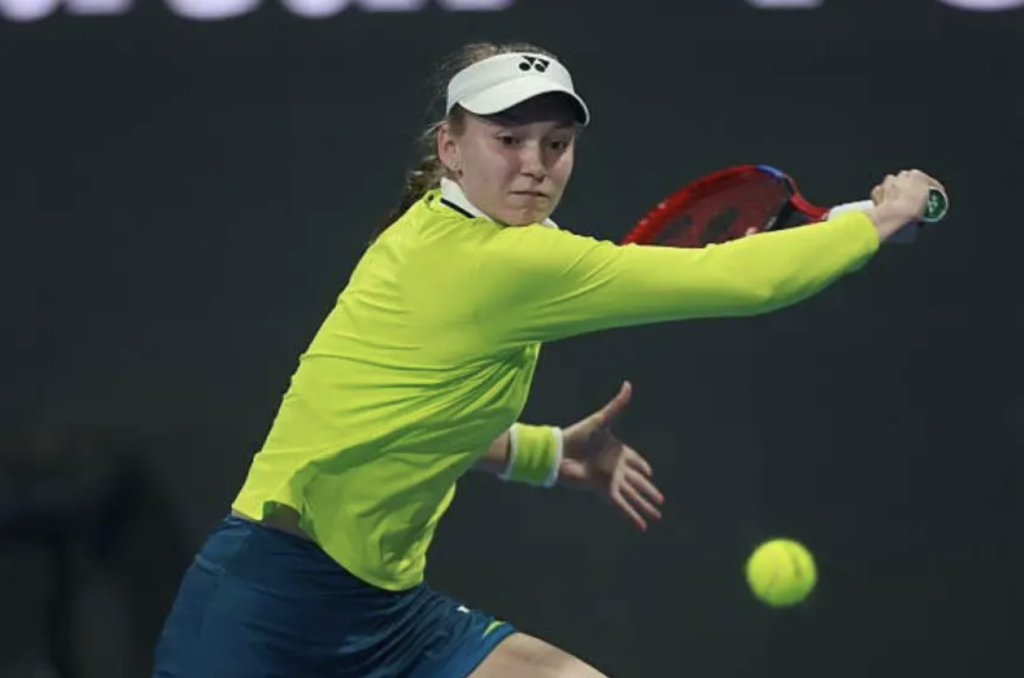
It was not a chaotic upset built on opponent errors. It was a performance anchored in clarity. Mboko attacked when the opening appeared, defended when required and, most importantly, refused to let Rybakina dictate the emotional rhythm of the match.
Defeating a Grand Slam champion at a WTA 1000 level is more than a single result. It signals readiness. In her post-match comments, Mboko emphasized the importance of “staying clear in key moments” and not allowing Rybakina’s power to control tempo. That mindset resurfaced in her next challenge.
A generational test against Andreeva. Mboko shocks Doha
Against Andreeva, the dynamic shifted. The match was more physical, more volatile and filled with momentum swings. This time, Mboko did not dominate from start to finish. She had to absorb pressure, recalibrate and rebuild points under stress.
What mattered most was not simply surviving tense stretches — it was how she managed them. In decisive moments, she chose when to accelerate rather than reacting passively. She sustained longer rallies without abandoning aggression and avoided forcing low-percentage shots.
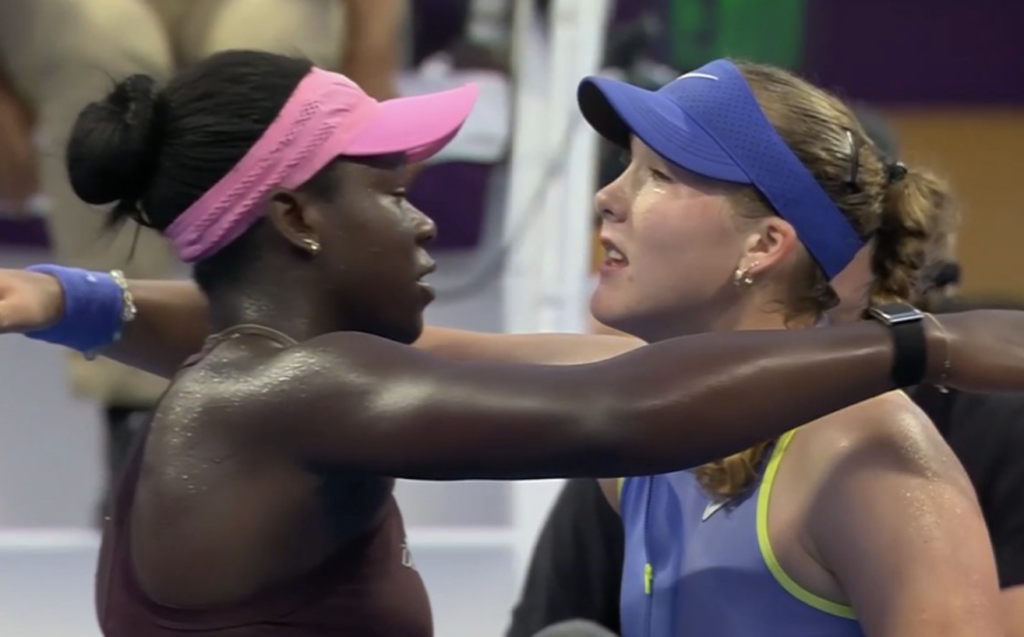
In press, Mboko explained that her focus throughout the week has been “competing point by point, without looking at ranking or context.” The phrase may sound routine, but in a WTA 1000 environment, alignment between intention and execution defines difference-makers.
A legitimate Top 10 push
With these results, Mboko positions herself mathematically within reach of a maiden Top 10 entry. Doha provides the structural opportunity: ranking points at this level carry significant weight.
Yet beyond the numbers, performance validates the possibility. This week she has shown:
Greater stability on serve.
Improved shot selection in extended rallies.
Physical endurance across multi-hour matches.
Emotional control under scoreboard pressure.
The Top 10 rarely opens by accident. It requires repeatable performance against elite opponents. In Doha, Mboko has defeated a Grand Slam champion and navigated a generational showdown under scrutiny.
Tactical growth on display
Perhaps the most compelling element of her week is not raw power — that was always present — but tactical development. Mboko no longer depends exclusively on winners. She understands when to construct patiently, when to vary trajectory and when to shift direction to destabilize opponents.
Against Rybakina, she absorbed pace and redirected. Against Andreeva, she embraced physical exchanges and maintained composure. That adaptability separates promising talent from sustainable contender.
On fast courts, such versatility becomes critical. Mboko’s game now appears layered rather than linear.
A week that could redefine a season
Pivotal weeks on tour do not always occur at Grand Slams. Sometimes a WTA 1000 provides the inflection point — the moment when a player transitions from prospect to protagonist.
Mboko still has matches ahead in Doha, and deeper rounds will present new challenges. But regardless of the final outcome, the statement has already been made.
She is competing with authority against elite names. She is closing tight matches under pressure. And she is doing so with a composure that suggests sustainability.
When a player begins to win these types of matches — against established champions, in high-stakes environments — a ranking breakthrough stops being hypothetical. It becomes a logical consequence.
Doha may ultimately be remembered not simply as a strong tournament for Victoria Mboko, but as the week her ascent became tangible.