
Daniil Medvedev doesn’t throw ideas around casually. When he speaks about the tour, it comes from the perspective of a former world No. 1, a Grand Slam finalist, and someone who has lived inside the calendar’s grind for over a decade.
This time, he aimed directly at the core of the system: the ATP rankings.
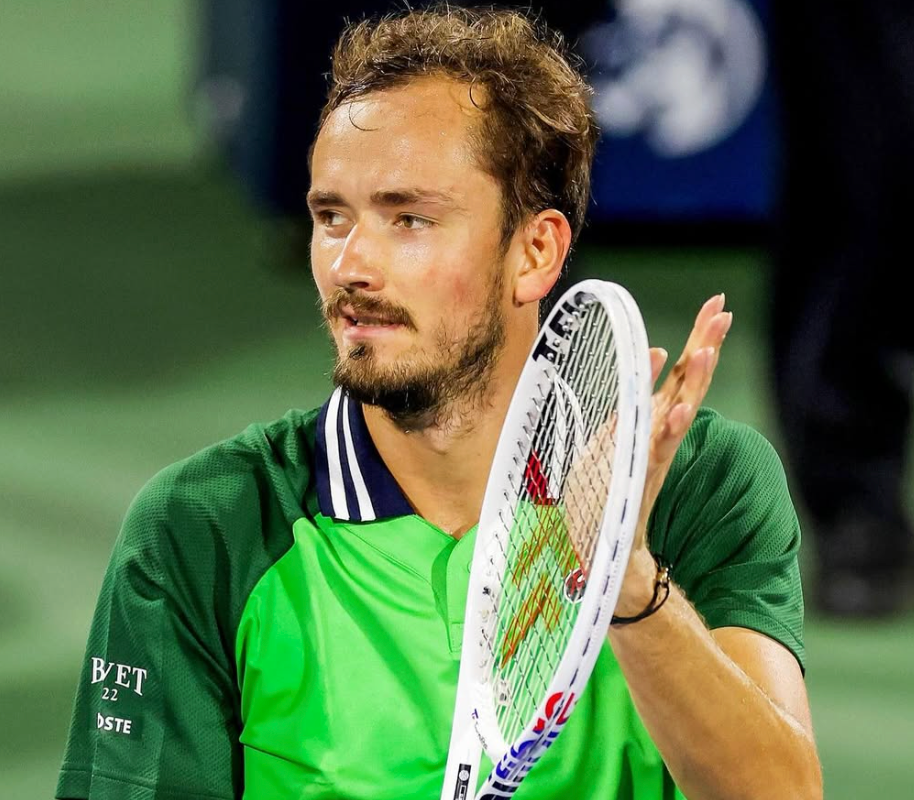
Medvedev Wants to Redefine the Rankings
His proposal sounds simple — and potentially seismic.
Only Grand Slams and Masters 1000 events should award ranking points. ATP 250s and 500s? Remove them from the equation entirely.
On paper, it’s a clean idea. In reality, it would fundamentally reshape professional tennis.
The real target: the calendar
Medvedev’s argument isn’t about prestige. It’s about overload.
Eleven months of competition.
Constant travel.
Surface switches.
A ranking system that rewards volume as much as excellence.
For years, players have quietly — and sometimes not so quietly — said the same thing: the schedule is suffocating.
If you want to maintain your ranking, you play.
If you want to climb, you play more.
If you don’t play, someone passes you.
The result? Stretches of six or seven consecutive tournaments, often driven less by ambition and more by fear of losing ground.
Medvedev isn’t just criticizing fatigue. He’s questioning structure.
A radical simplification. Medvedev Wants to Redefine the Rankings
His solution: remove ranking points from 250s and 500s. Let the four Slams and the Masters 1000s define the hierarchy.
The logic is straightforward. If smaller events don’t impact ranking, players would have real freedom to choose when to compete and when to rest.
“It’s the only way to shorten the tour,” he suggested.
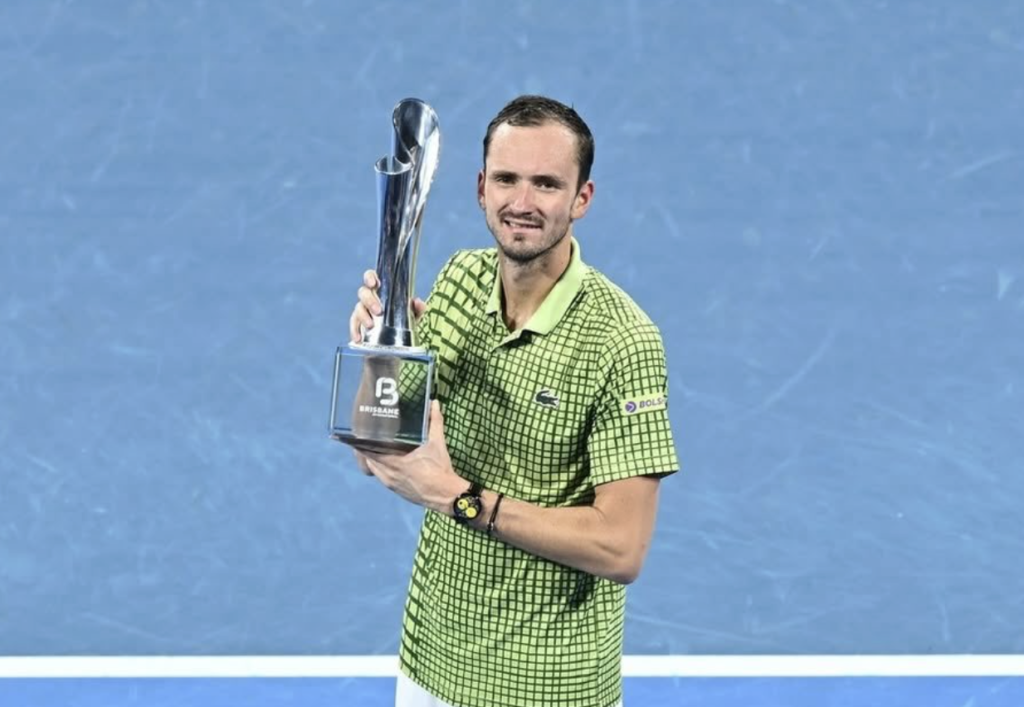
In other words, the ranking system is what locks players into the grind. Adjust the ranking, and the calendar naturally breathes.
But that’s the theory.
The economic wall
Medvedev was also realistic.
He openly admitted this will likely never happen. Why? Because tennis isn’t just sport — it’s business.
Tournaments operate on long-term licenses. Sponsors invest based on visibility and star participation. Remove ranking points, and those events lose competitive relevance.
And once they lose relevance, they lose top players.
Once they lose top players, they lose revenue.
“Other tournaments won’t just say, ‘Okay, we’re stepping aside,’” Medvedev noted. “They’re businesses.”
That’s the tension at the heart of the debate: player sustainability versus financial structure.
The injury factor
To reinforce his point, Medvedev referenced cases like Holger Rune’s injury in a smaller event while chasing points to qualify for the ATP Finals.
The implication is sharp.
Players don’t always compete because they want to.
They compete because they need the points.
And when the system rewards constant presence, bodies eventually pay the price.
The season doesn’t shorten itself. The ranking incentives keep it long.
What would actually change?
If Medvedev’s model were implemented, the sport would shift dramatically.
Players would likely build shorter, more targeted seasons.
The importance of 250s and 500s would shrink competitively.
The ranking would become even more concentrated around the biggest stages.
But it would also raise complex questions:
What happens to players outside the top 20 who rely on smaller events to climb?
Would the gap between elite and mid-tier players widen?
Would the system become more exclusive, more top-heavy?
Simplification at the top could create imbalance elsewhere.
The deeper message
Beyond the mechanics, Medvedev’s point echoes something he recently discussed about the “invisible side” of tennis: the toll of constant movement and adaptation.
This isn’t about playing less tennis.
It’s about playing better tennis.
An overloaded schedule leads to fatigue.
Fatigue lowers performance quality.
Lower quality ultimately affects the product.
Medvedev isn’t advocating laziness. He’s advocating sustainability.
Will anything change?
He himself seems skeptical.
While he’s active, he doesn’t expect the structure to shift. The ATP is built on complex commercial agreements, long-term contracts, and a layered ecosystem that depends on every category of tournament.
Rewriting that system would mean renegotiating the sport’s financial DNA.
But debates don’t need immediate implementation to matter.
When a former world No. 1 questions the foundation of the ranking structure, the conversation doesn’t disappear.
A question that lingers
Is an eleven-month calendar sustainable?
Should rankings push players to compete almost nonstop?
Can tennis protect its athletes without undermining its business model?
There are no easy answers.
But meaningful change in sport often starts the same way — with an uncomfortable question.
And Medvedev just asked one. Read: Medvedev and Tennis’ Invisible Grind