
There are losses that hurt. And there are losses that teach.
For Jannik Sinner, the semifinal defeat to Novak Djokovic at the Australian Open was both.
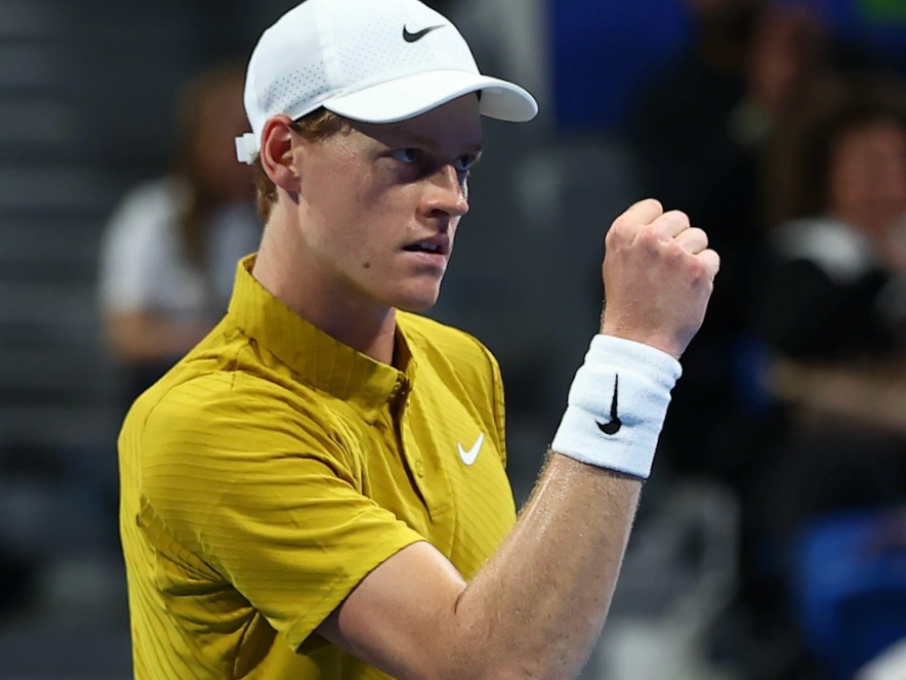
The Lesson Sinner Took From Losing to Djokovic
He did not hide from it. He did not search for excuses. He did not reduce it to a couple of unlucky points. Instead, he addressed it directly.
“The loss against Djokovic taught me many things. It was a great match… I had my chances,” Sinner told Sky Sports Italia.
The tone was not dramatic. It was composed.
That distinction matters.
It Was Never Just Another Match
Sinner arrived in Melbourne as the two-time defending champion. He was no longer the rising challenger — he was the standard. He had grown used to controlling big stages, managing pressure, and closing out tight matches in major tournaments.
Across the net stood Novak Djokovic. Thirty-eight years old. Still uniquely uncomfortable to face when a match stretches into deep waters.
Losing in five sets, with real opportunities to swing the result, is not easy to digest. Especially when you enter as the player many consider the present and future of the sport.
“It wasn’t easy to accept,” Sinner admitted.
Acceptance is the first step toward evolution.
The more revealing part, however, is not what he said — it’s what he’s doing.
Adjustments, Not Overreactions. The Lesson Sinner Took From Losing to Djokovic
Sinner spoke about changes. Small details.
“We’re changing things on court… they take time before they become natural.”
That sentence reveals more than it seems.
Elite players do not reinvent themselves after a loss like this. They refine. They adjust positioning by half a step. They alter serve patterns on key points. They rethink shot selection under pressure.
“It’s not only technical,” Sinner added. “It’s also tactical and mental. There are many things I can improve.”
Notice what he did not say.
He did not say he needs to hit harder.
He did not say he needs a new identity.
He spoke about decisions.
And when a young player with his résumé begins to frame growth in terms of decision-making rather than mechanics, it signals long-term thinking.
What Djokovic Exposed — Without Saying It
Matches against Djokovic rarely hinge on one spectacular rally. They are decided by endurance of focus.
When you lose to him in five sets, the message is almost always the same:
You must sustain clarity longer.
You must choose your acceleration moments more precisely.
You must manage key games with ruthless discipline.
Sinner did not list those elements explicitly. He didn’t need to. Everyone on tour understands what a five-set loss to Djokovic implies.
Djokovic’s greatest advantage has never been raw power. It has been the ability to remain structurally intact in chaos. To reset instantly. To treat a missed opportunity as a closed chapter rather than a lingering doubt.
For Sinner, the lesson is not about matching Djokovic’s past achievements. It’s about mastering that layer of composure.
Losing Is Part of the Process
Perhaps his most mature line was this:
“Losing sometimes is normal.”
In a circuit that thrives on narratives about dominance and succession, that statement is rare.
There was no panic. No attempt to erase the defeat. No emotional distancing.
Instead, there was integration.
The difference between spiraling and evolving often lies in that moment.
Doha as a First Signal
After Australia, Sinner returned in Doha. The performance was not dramatic — it was controlled. He won his opening match without facing break points, dictating rhythm and showing no visible urgency to prove something.
That detail is important.
Players shaken by major losses often overplay in their next appearance. They press. They force. They look tense.
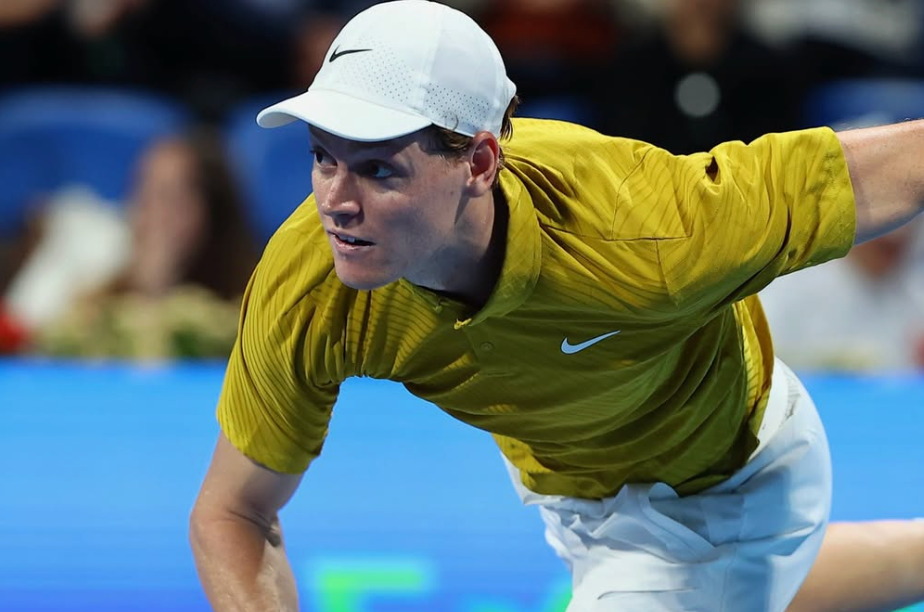
Sinner did not.
He looked like someone in process.
A Broader Perspective: Generational Context
This semifinal loss also exists within a larger narrative. Sinner belongs to a generation that has largely taken control of the tour. Alongside Carlos Alcaraz, he has been viewed as the face of the post–Big Three era.
Facing Djokovic in a major semifinal is not merely another match. It is a symbolic confrontation between eras.
Djokovic, even at 38, represents a standard of competitive longevity that younger players are still learning to decode. The physicality is obvious. The mental durability is subtler — and more decisive.
Sinner’s reaction suggests he understands that.
The Sinner Who Returns May Be More Dangerous
Some players unravel after losing a major semifinal in this fashion. The margin is thin, and self-doubt can creep in.
Sinner does not appear to be there.
What he projects is steadiness.
That may be the most unsettling message for his rivals.
Because a player who absorbs a five-set defeat to Djokovic without dramatizing it is a player who is recalibrating — not retreating.
The Australian Open semifinal was not a negative rupture. It was a recalibration point.
Djokovic won the match.
But in the process, he may have accelerated Sinner’s next evolution.
And in elite tennis, evolution — not emotion — is what shapes the next champion.