
Some coaching hires are about results.
Others are about timing.
Grigor Dimitrov’s decision to bring David Nalbandian into his team feels much more like the second kind.

Why Dimitrov Chose Nalbandian
On paper, it’s a technical move. A former top player joining an experienced name still trying to stay relevant deep into his 30s. But when Dimitrov speaks about Nalbandian, he barely talks about tennis.
And that’s the telling part.
Not nostalgia — alignment. Why Dimitrov Chose Nalbandian
Yes, they share history. More than a decade ago they faced each other on court, when Nalbandian was still competing and Dimitrov was just beginning to carry the “future star” label. That storyline is easy to romanticize.
But Dimitrov shut that down quickly.
“David is a very special guy. I played him once and he was always a nightmare for me. I practiced with him as well. I like his vision of sport and of life.”
Not his backhand.
Not his tactics.
His vision.
That choice of word matters.
This isn’t about copying patterns or adding a few percentage points to a serve. It’s about perspective.
Career stage changes priorities
Dimitrov is no longer the next big thing. He’s not the elegant prodigy chasing his first breakthrough. And he’s not a player obsessively climbing the rankings anymore.
He’s in a different phase.
“When you’re at the stage of your career that I’m in, you start thinking about what’s important to you. Over time, a lot changes.”
That doesn’t sound like desperation for a Slam.
It sounds like recalibration.
Players evolve. What drives a 22-year-old isn’t what drives a 33-year-old who has seen the full spectrum — hype, injury, resurgence, decline, reinvention.
And in that recalibration, Nalbandian fits.
Beyond tactics
What Dimitrov emphasized most wasn’t strategy. It was lifestyle.
“One of the things David does very well is enjoy life every day beyond sport. He does things for the right reasons.”
That’s a striking thing to say when announcing a new coach.
He even added, almost disarmingly, “I’m not even talking about tennis right now.”
That tells you everything.
Dimitrov isn’t just looking for technical correction. He’s looking for someone whose internal compass makes sense to him at this stage.
The value of lived experience
Of course, tennis still matters.
Nalbandian was one of the sharpest minds of his generation. He read the game exceptionally well, understood tempo shifts, and built points with clarity rather than brute force.
He also experienced everything: wins over the biggest names, Masters titles, injuries, momentum swings, pressure.

“It’s good to have someone who has been there, who went through injuries and everything you can imagine. That gives confidence to any player.”
When a coach has actually lived through what you’re navigating, the conversations are different. They’re less theoretical. More grounded.
That credibility carries weight.
A project bigger than one season
What stands out is that this move doesn’t feel urgent. It doesn’t feel like a last roll of the dice.
It feels intentional.
Dimitrov’s tone suggests he’s thinking about how he wants to live the remaining years of his career — not just how many matches he can win this season.
“I always say it: what we’re doing right now is a dream, not reality.”
That sentence shifts the frame.
It’s about awareness. Perspective. Gratitude.
When a player reaches that space, performance can actually become freer. The pressure changes shape.
What could change on court?
Technically, the partnership makes sense.
Nalbandian was a master of rhythm disruption — altering pace, choosing the right moments to redirect, staying composed when rallies got chaotic. Dimitrov, always technically gifted and creative, might benefit from that clarity.
This may not produce a dramatic overhaul.
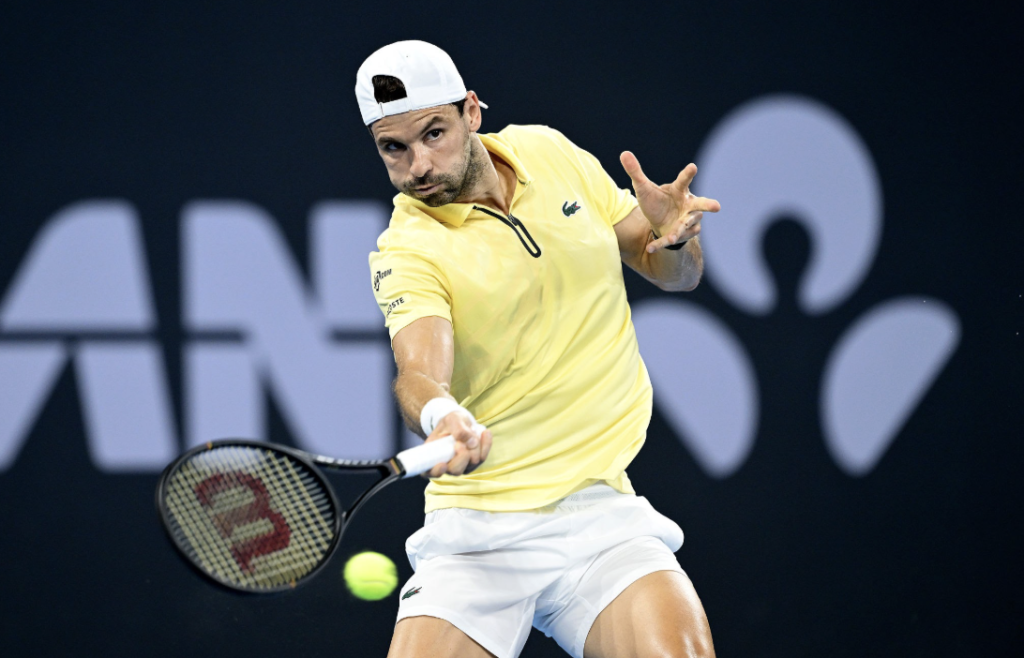
More likely, it leads to refinement:
Better decision-making under pressure.
Cleaner patterns in tight moments.
More emotional steadiness when matches swing.
At this level, marginal gains are rarely about mechanics. They’re about conviction.
An alliance with identity
The most interesting part of this partnership is that it doesn’t scream necessity. It suggests meaning.
Not a panic move.
Not a ranking play.
A philosophical alignment.
And sometimes, when a player stops chasing validation and starts chasing purpose, the results follow in unexpected ways.
Dimitrov didn’t hire Nalbandian to fix a backhand.
He hired him because, at this stage of his life, their visions match.
And that might matter more than any tactical tweak.